Infrastructure gap
Many schools have no dedicated STEM lab, tools or reliable digital resources.

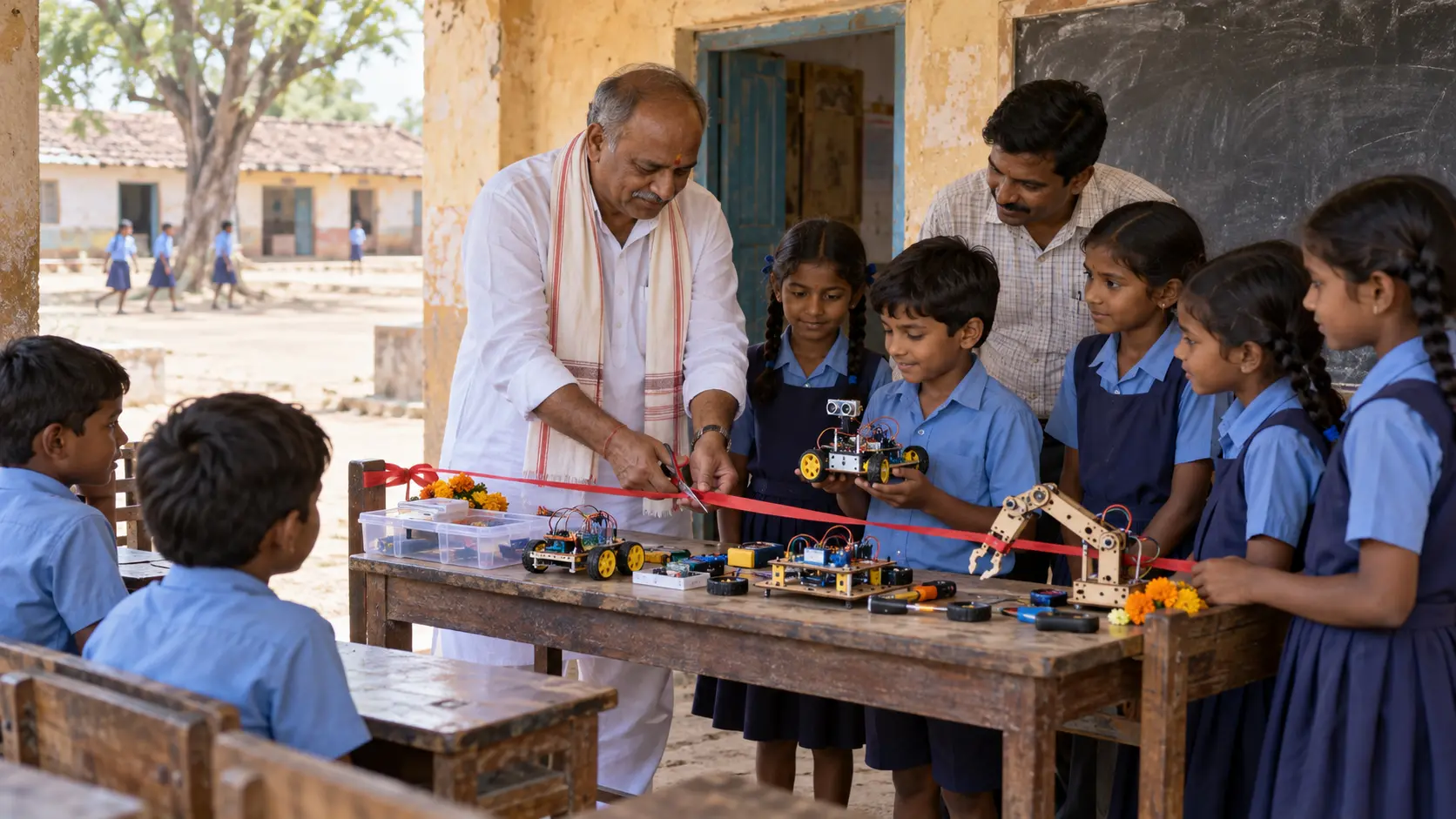
Hanum Utthan · Government Projects
Practical STEM, robotics and future-skills access for government and rural schools—using the classroom they already have.
Plan a school initiative01 · The access gap
Millions of bright students in government and rural schools have the potential to do great things, but many have limited access to modern STEM learning, hands-on projects and digital resources.
Many schools have no dedicated STEM lab, tools or reliable digital resources.
Children rarely get to handle robotics kits, sensors or beginner coding tools.
Students, families and educators may not yet see the study and career paths these skills open.
Teachers need practical, age-appropriate support to lead activity-based lessons.
A permanent lab can be difficult to set up and maintain within a school's budget.
Rural and underserved learners can be left behind when hands-on learning is city-centred.
The brochure highlights a 70%+ access-to-practical-STEM gap in rural areas. Local assessment helps define the needs of each school.

02 · The solution
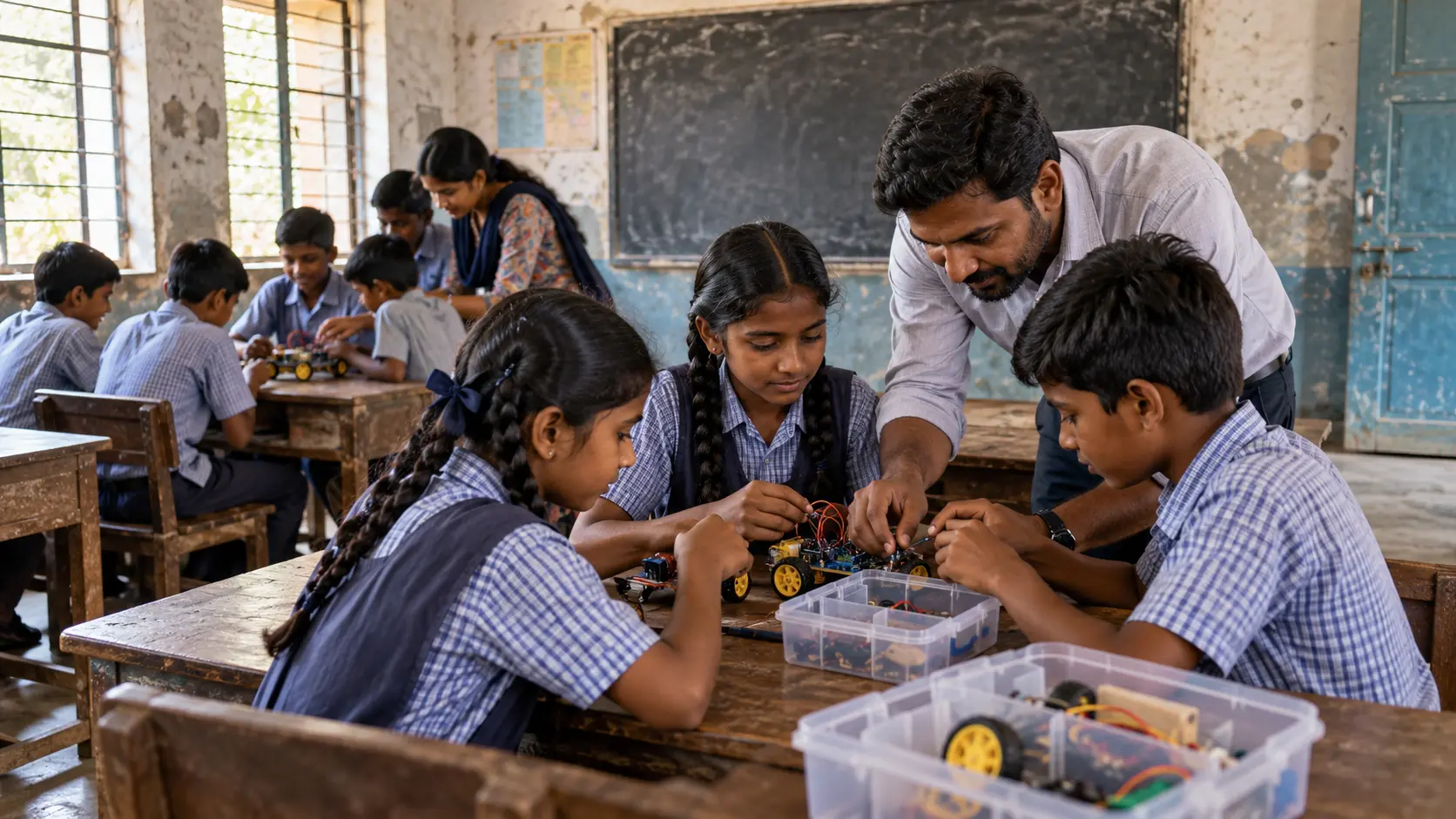
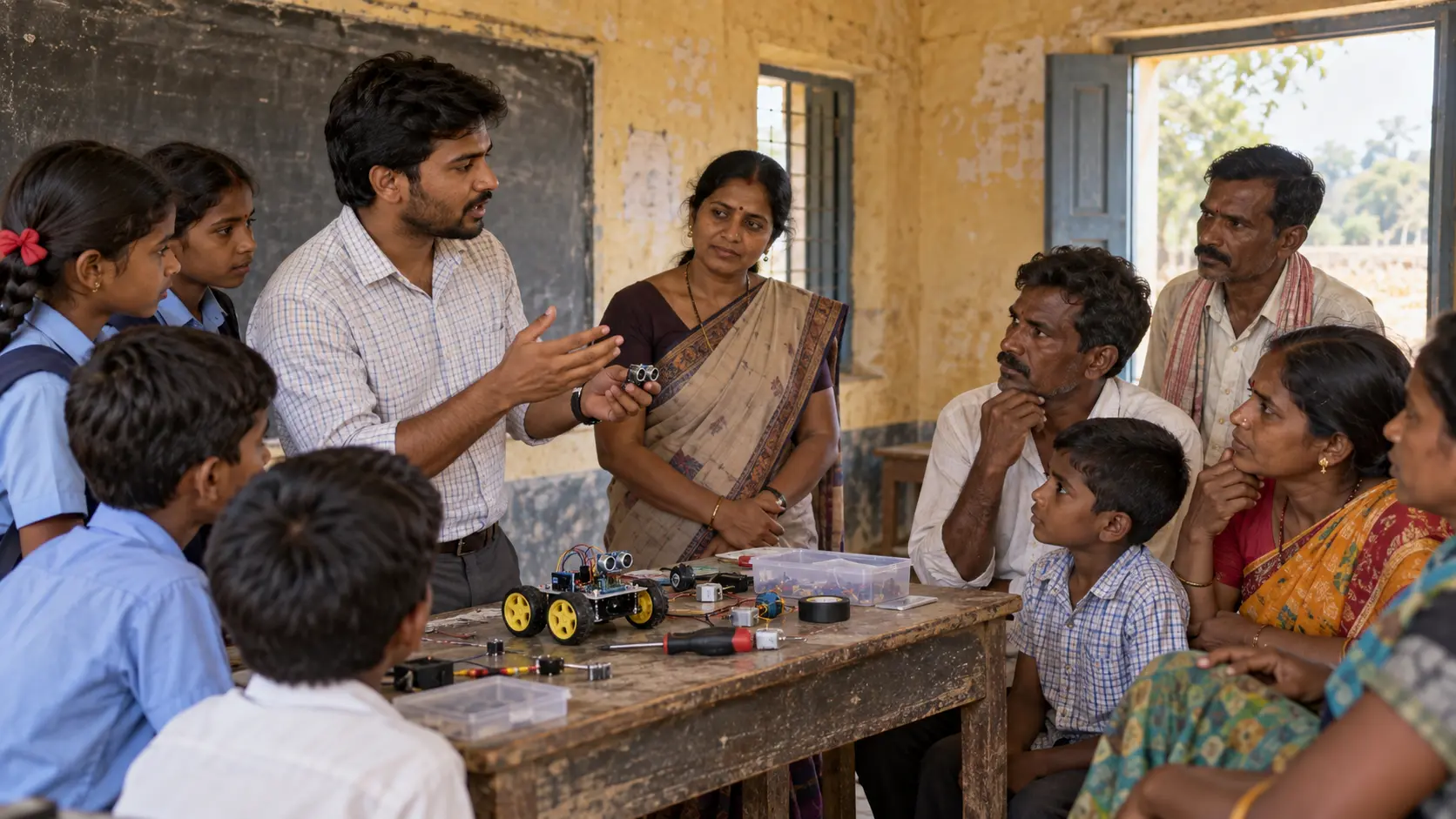
Hanum Utthan pairs portable kits with educators and teacher support. Students can explore, build and test in the regular classroom—without waiting for a permanent lab.
Government, constituency, local-body and CSR initiatives can be explored within their applicable eligibility, approval and funding rules.
03 · Who we are
Smart Yantra Labs is an Indian EdTech company working since 2013 to bring STEM, robotics, AI and skill-based education to schools, with a special focus on government and rural communities.
04 · What we do
Interactive introductions to STEM, robotics and future careers, with live demonstrations and real-life examples.
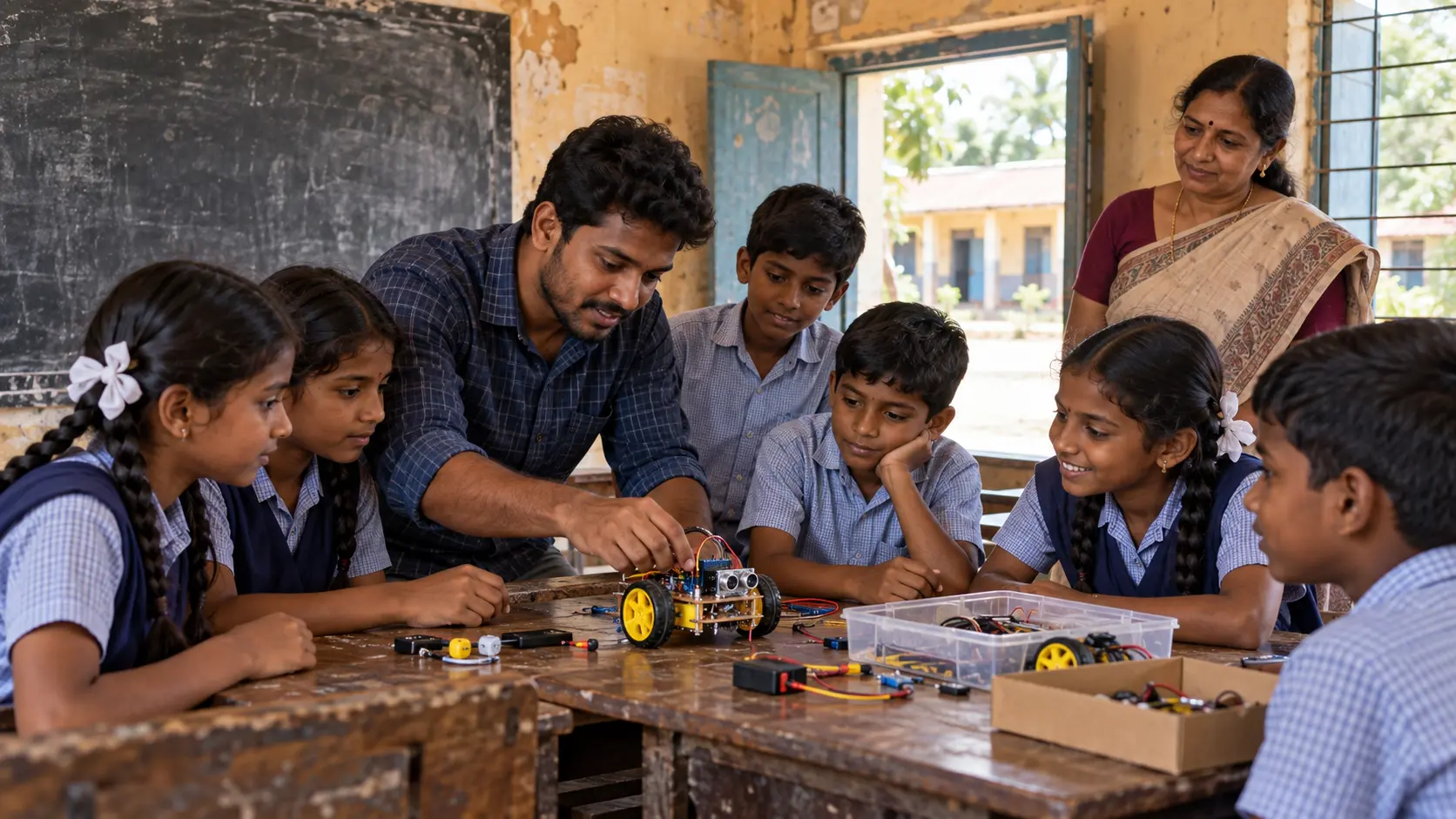
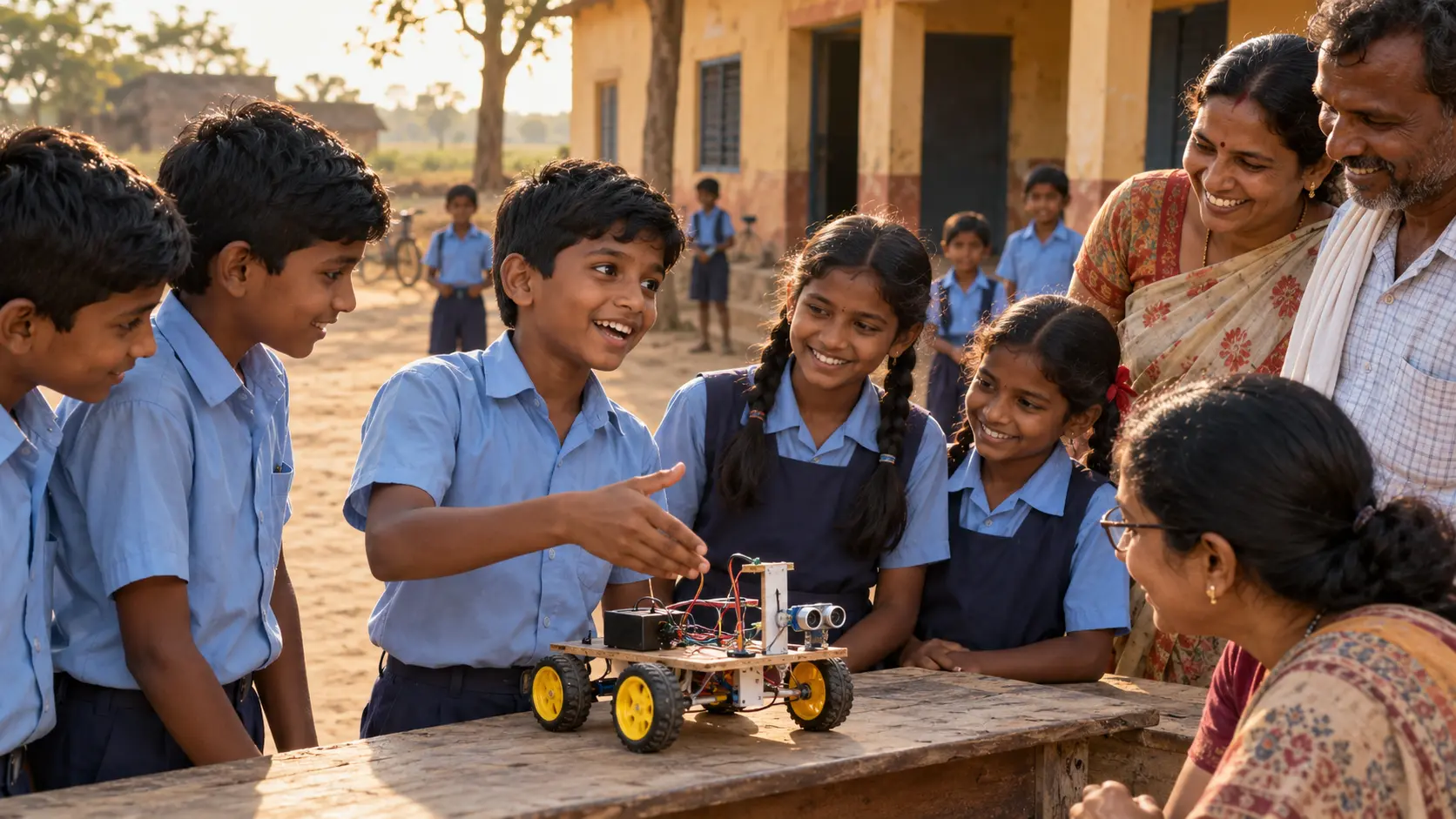
Guided projects with entry-level kits, practical worksheets and safe, age-appropriate activities.
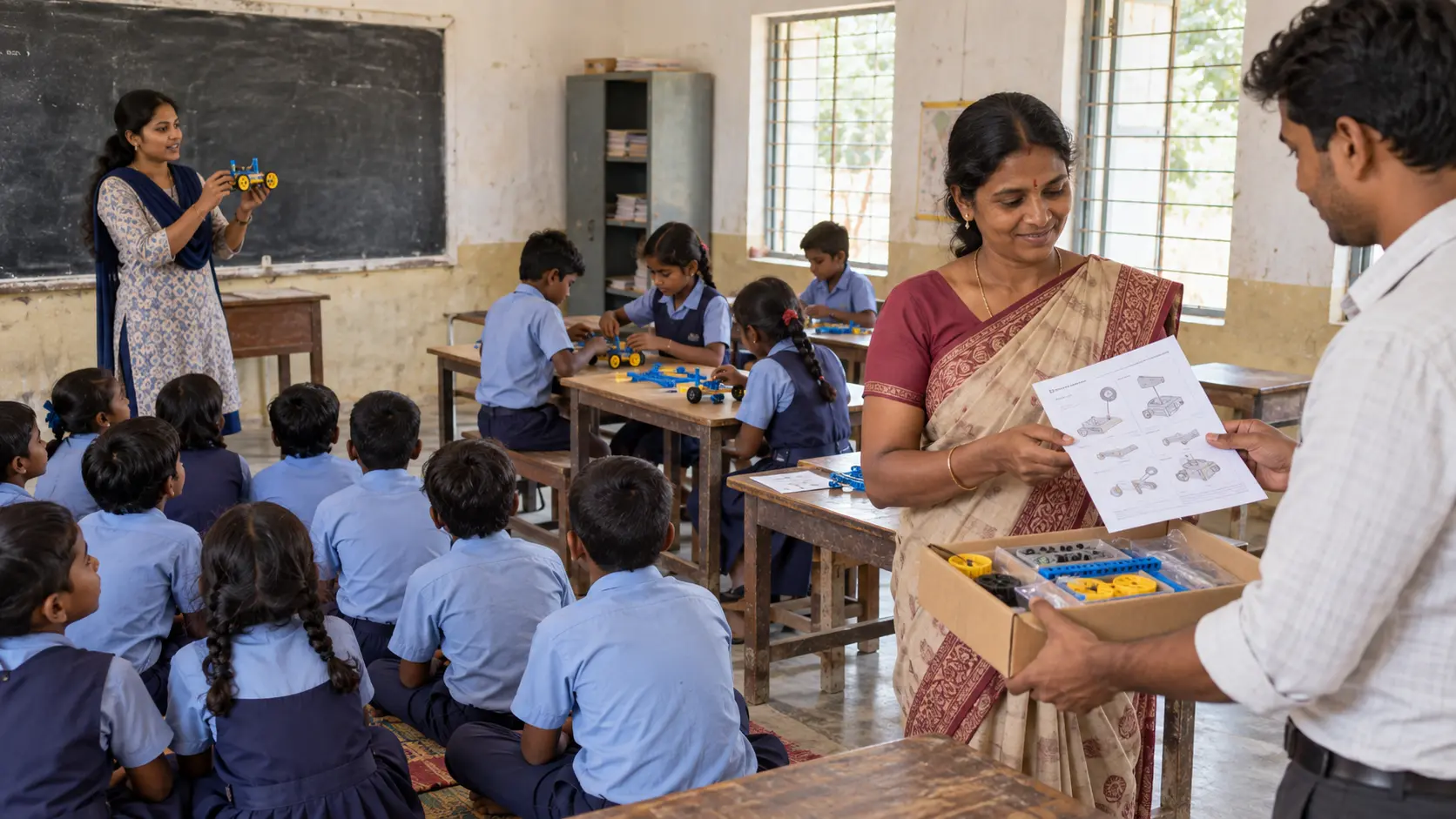
Practical orientation, simple teaching resources, mentoring and ongoing support for school teachers.
Curriculum-aligned Hindi and English videos, activity guides and worksheets, including offline-friendly resources.
Exposure to applications, expert talks and information about further learning opportunities.
Advanced workshops, competitions and sanctioned lab support when separately approved and funded.
05 · How we do it
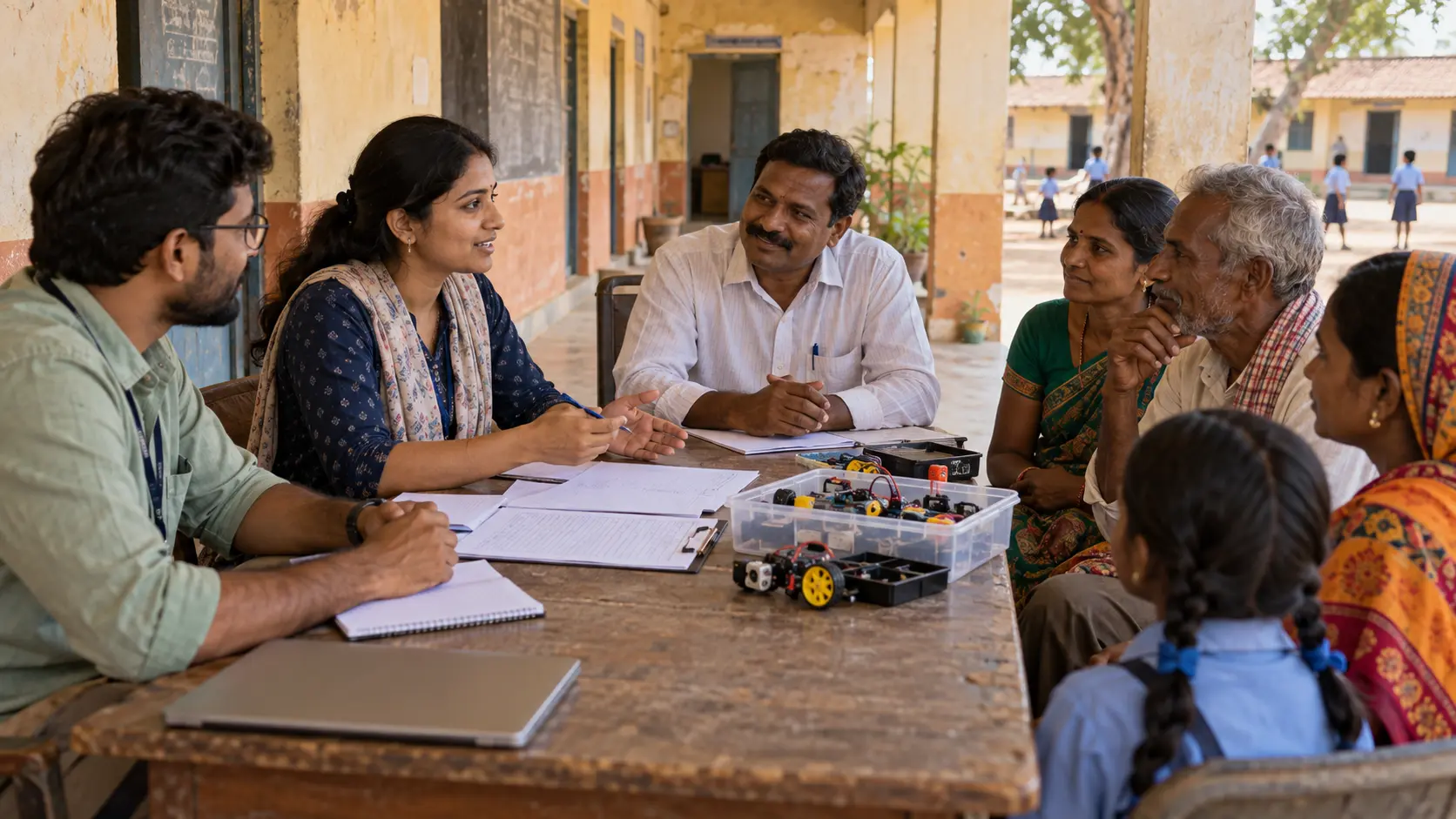
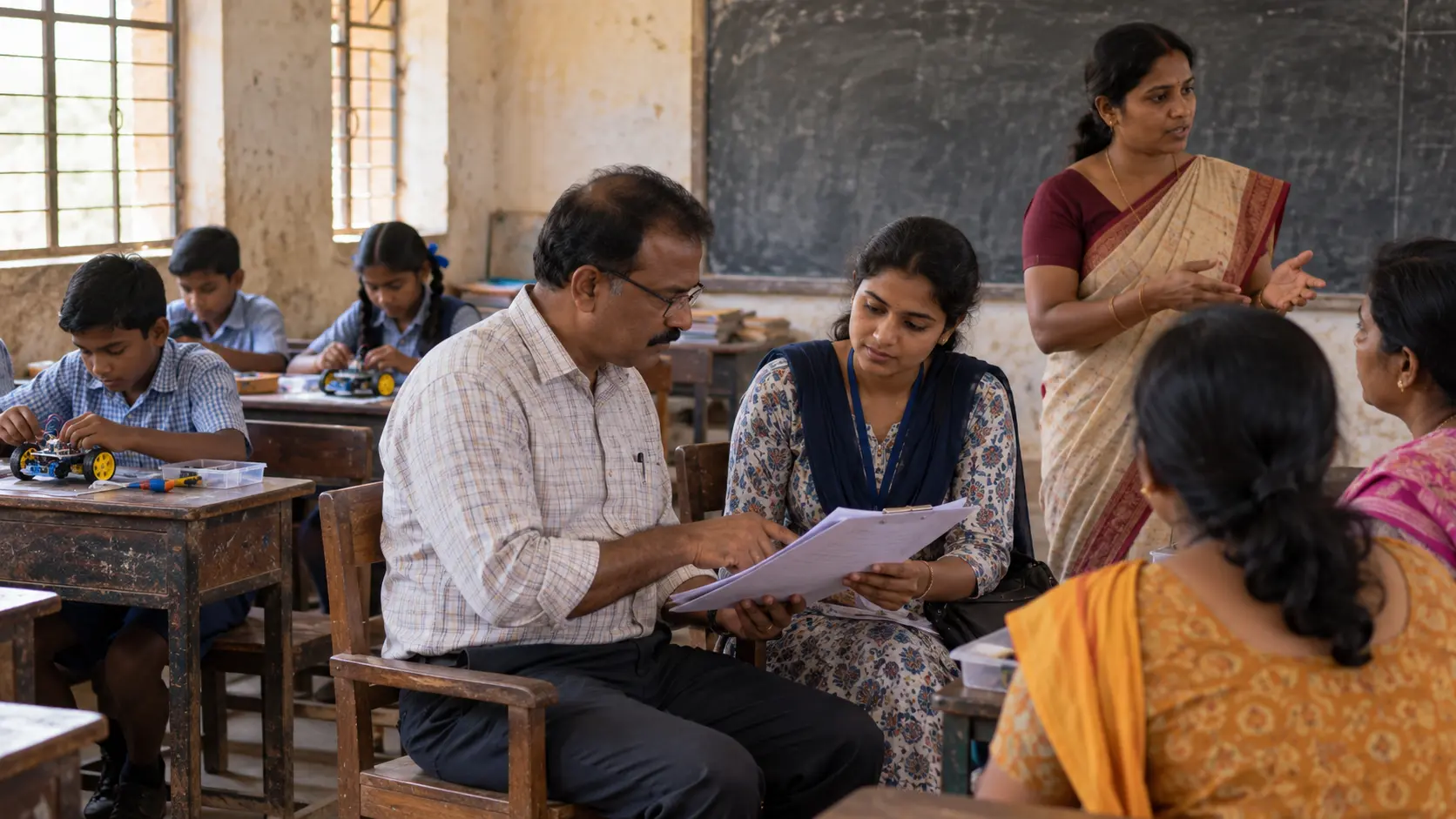
Plan around the available classroom, learner groups and approved scope. Begin with a practical visit, then decide together what the next step can be.
Select eligible schools, understand learner needs and review available facilities.
Coordinate with the relevant department, CSR partner or local administration; agree scope and approvals.
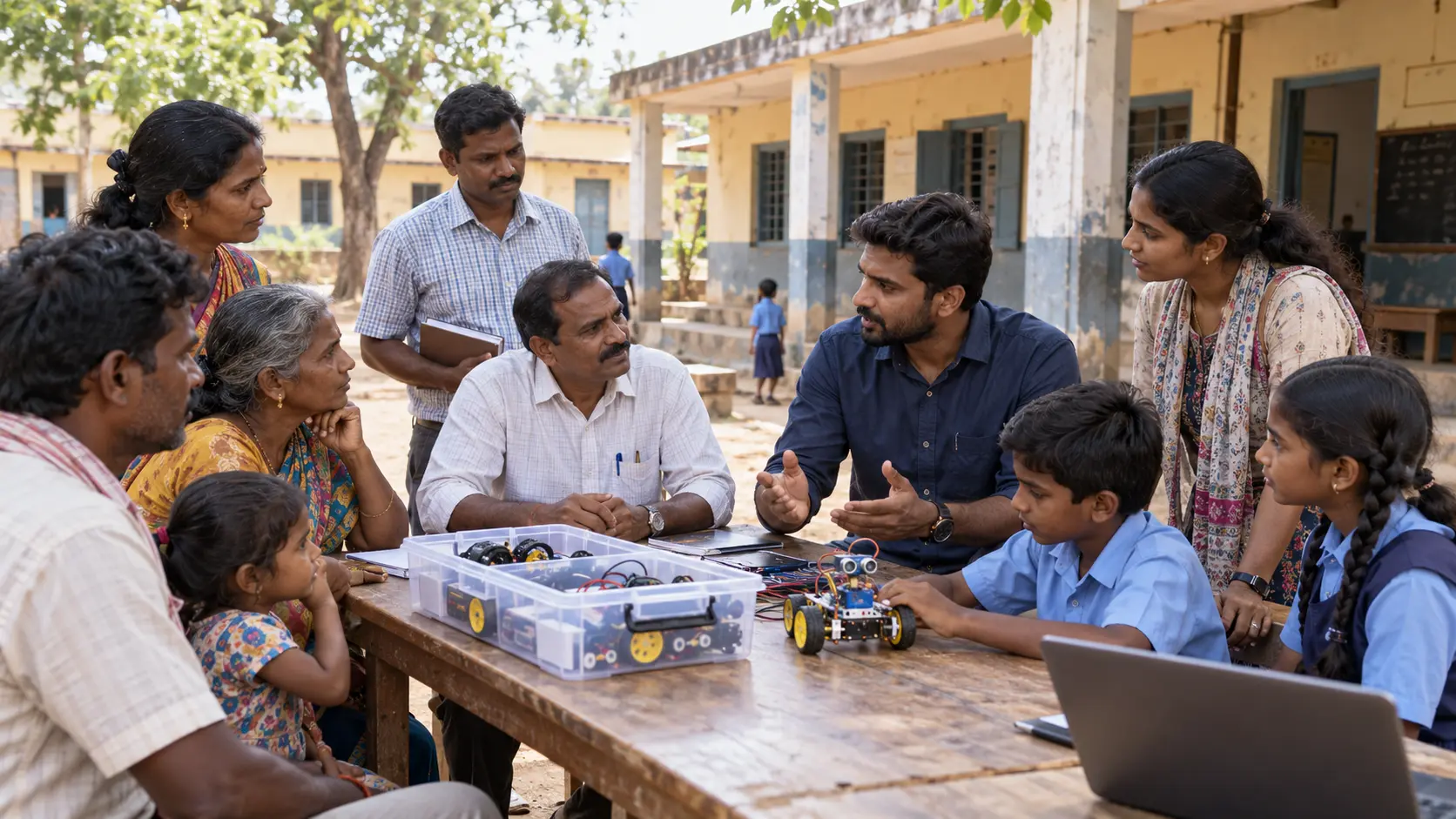
Introduce the programme to teachers, students, families and school leadership.
Run guided, low-cost robotics and STEM activities in the school's existing classroom.
Provide practical training and resources so school staff can continue activities confidently.
Review participation, work completed and next steps; share a clear school-wise record.
Projects may involve education departments, approved schemes, constituency or local-body initiatives, CSR partners and NGOs, subject to required approvals and sanctioned funding.
06 · Grade-wise curriculum & proof
Age-appropriate projects make concepts visible and give every learner a chance to build, test and improve.
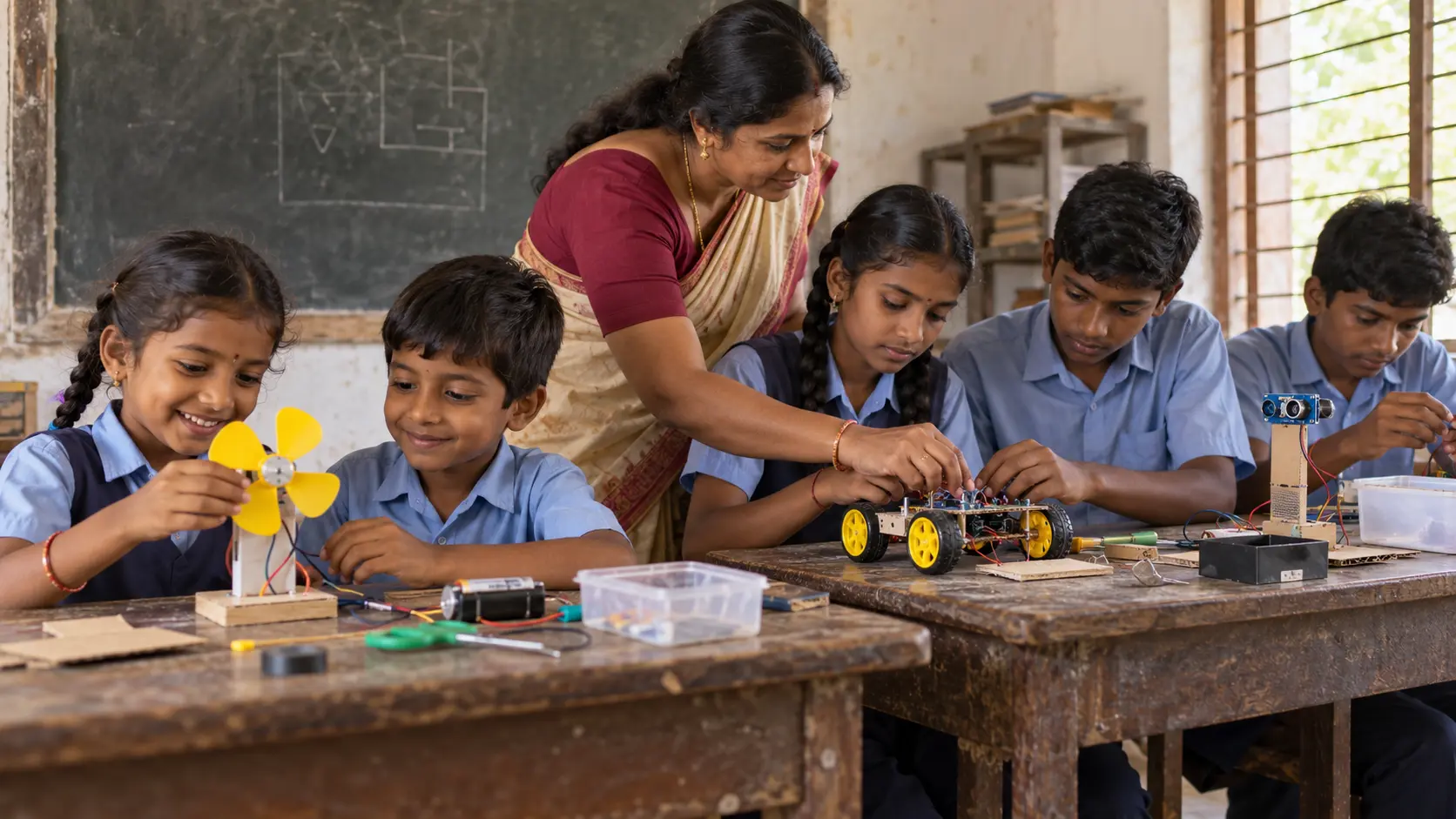
Curiosity, observation, shapes, colours and motion
Sample project · Moving fanSimple machines, basic electronics and creativity
Sample project · Line followerSensors, coding, teamwork and real-life problem solving
Sample project · Smart dustbinArduino / microcontrollers, robotics and automation
Sample project · Weather stationAdvanced robotics, AI basics, IoT and future pathways
Sample project · Drone basicsExpected outcomes include increased interest in STEM, stronger collaboration, confidence with modern technology and greater awareness of future pathways.
07 · Why choose us
Familiarity with school coordination, local context and implementation needs.
Low-cost, reusable kits can support meaningful activity without requiring an advanced lab.
Activities welcome underserved learners, girls and first-generation learners.
A delivery mix of educators, STEM practitioners, content teams and field support.
Participation, projects, teacher engagement and follow-up can be documented.
Work alongside education departments, CSR partners, NGOs and local communities.
Start with a workshop, build teacher confidence and expand when resources allow.
Resources, mentoring and follow-up help activities continue after the first session.
Purpose-driven. Cost-conscious. Focused on practical learning and lasting opportunity.
Government-project value should be expressed as reach, cost per beneficiary, teacher capacity, utilisation, project outputs, maintenance and sustainability.

Transparent beneficiary metrics make scale easier to understand.
Training reduces dependence on one-time external demonstrations.
Track timetable usage, activities, projects and equipment status.
Operational reviews, spares, refresher training and reporting protect public investment.
A read-only scenario using the same sample-school baseline across solution pages. It is an estimate for discussion, not a promise of admissions or revenue.
*Scenario assumptions: 1% annual admissions uplift (10 students), ₹2,000 monthly fee and 30% contribution after variable costs. Three yearly cohorts are counted across 36 months. Growth is not attributed to this solution. Actual enrolment, vacant seats, retention, taxes, recurring and operating costs, implementation and final quotation change the outcome. For CSR/public programmes, recovery is not modelled.
Maximum value comes from implementation, teacher readiness, regular utilisation, review and visible outcomes—not hardware alone.
08 · Packages & offer
Choose a starting point according to learner needs, school count, location, duration and approved budget.
1–2 days
Single school or cluster-level outreach
3–5 days
Government and rural schools; block or district projects
5+ days
Multiple schools, district or state initiatives
Investment is scoped to the number and location of schools, learner groups, duration and available funding. Flexible deployment can help maximise reach within an approved budget.
09 · Frequently asked questions
यह rural और underserved schools के लिए practical learning, STEM, coding और robotics access बढ़ाने वाला implementation model है। Delivery local needs, teacher readiness और available infrastructure के अनुसार रखी जाती है। इसका उपयोग करने का practical तरीका है: पहले students का level identify करें, फिर age-appropriate activity चुनें, short explanation दें, hands-on task कराएं और अंत में reflection या assessment लें। इस approach से product classroom activity बनता है, केवल display या equipment नहीं।
The final price for Hanum Utthan depends on capacity, selected modules or equipment, implementation, training and support. Share the institution type, location, participant or student count and available infrastructure so Smart Yantra Labs can provide an itemised proposal with inclusions, exclusions, taxes and service terms.
Support plan में installation के बाद orientation, troubleshooting, consumable या kit replacement, software/content updates, warranty और escalation process साफ लिखा होना चाहिए। Purchase से पहले school को response time, responsible contact, exclusions और renewal cost लिखित में confirm कर लेना चाहिए।
Teacher training का उद्देश्य केवल equipment चलाना नहीं, बल्कि lesson शुरू करना, activity समझाना, students को guide करना, basic troubleshooting और learning evidence maintain करना है। Training को beginner-friendly रखा जा सकता है और school में नए teachers आने पर refresher support भी plan किया जा सकता है।
यह rural और underserved schools के लिए practical learning, STEM, coding और robotics access बढ़ाने वाला implementation model है। Delivery local needs, teacher readiness और available infrastructure के अनुसार रखी जाती है। इसका उपयोग करने का practical तरीका है: पहले students का level identify करें, फिर age-appropriate activity चुनें, short explanation दें, hands-on task कराएं और अंत में reflection या assessment लें। इस approach से product classroom activity बनता है, केवल display या equipment नहीं।
Hanum Utthan is designed for Rural / Government Schools. We confirm the right fit by reviewing learner age or grade, school goals, available infrastructure, teacher readiness and the outcome the institution wants to achieve.
The confirmed Hanum Utthan scope can include the required equipment or platform, learning resources, implementation, teacher orientation and post-launch support. The final bill of quantities, inclusions, exclusions, warranty and timeline are listed clearly in the school-specific proposal.
The final price for Hanum Utthan depends on capacity, selected modules or equipment, implementation, training and support. Share the institution type, location, participant or student count and available infrastructure so Smart Yantra Labs can provide an itemised proposal with inclusions, exclusions, taxes and service terms.
A suitable classroom, training room, hall or existing lab can usually be used for Hanum Utthan. The final requirement depends on participant count, activity format, equipment, power, storage, movement space and safety; the team checks these details before confirming the plan.
Teacher training का उद्देश्य केवल equipment चलाना नहीं, बल्कि lesson शुरू करना, activity समझाना, students को guide करना, basic troubleshooting और learning evidence maintain करना है। Training को beginner-friendly रखा जा सकता है और school में नए teachers आने पर refresher support भी plan किया जा सकता है।
10 · Transformation unlock
Empower students. Build teacher confidence. Strengthen schools and communities through practical learning—one approved, measurable initiative at a time.
Planning guides
Hanum Utthan STEM Programme for Government and Rural Schools. A practical planning guide for schools evaluating government and rural school access.
Read guideHanum Utthan Project Evidence and Teacher Workflow. A practical planning guide for schools evaluating project evidence.
Read guideHanum Utthan Eligibility, Procurement and Support. A practical planning guide for schools evaluating school partnership selection.
Read guideYour privacy choices
Essential browsing always works. Optional permissions are your choice and can be changed later.