
Samyak Sankalp · CSR Education Projects
A first chance to build can change what a child imagines.
Bring hands-on robotics and STEM discovery to government and underserved schools through a practical, CSR-supported workshop.
Plan a school programmeSMART YANTRA LABSCSR Education PartnershipRobotics Learning Corner
01 · The challenge
Curious children. Too few chances to try.
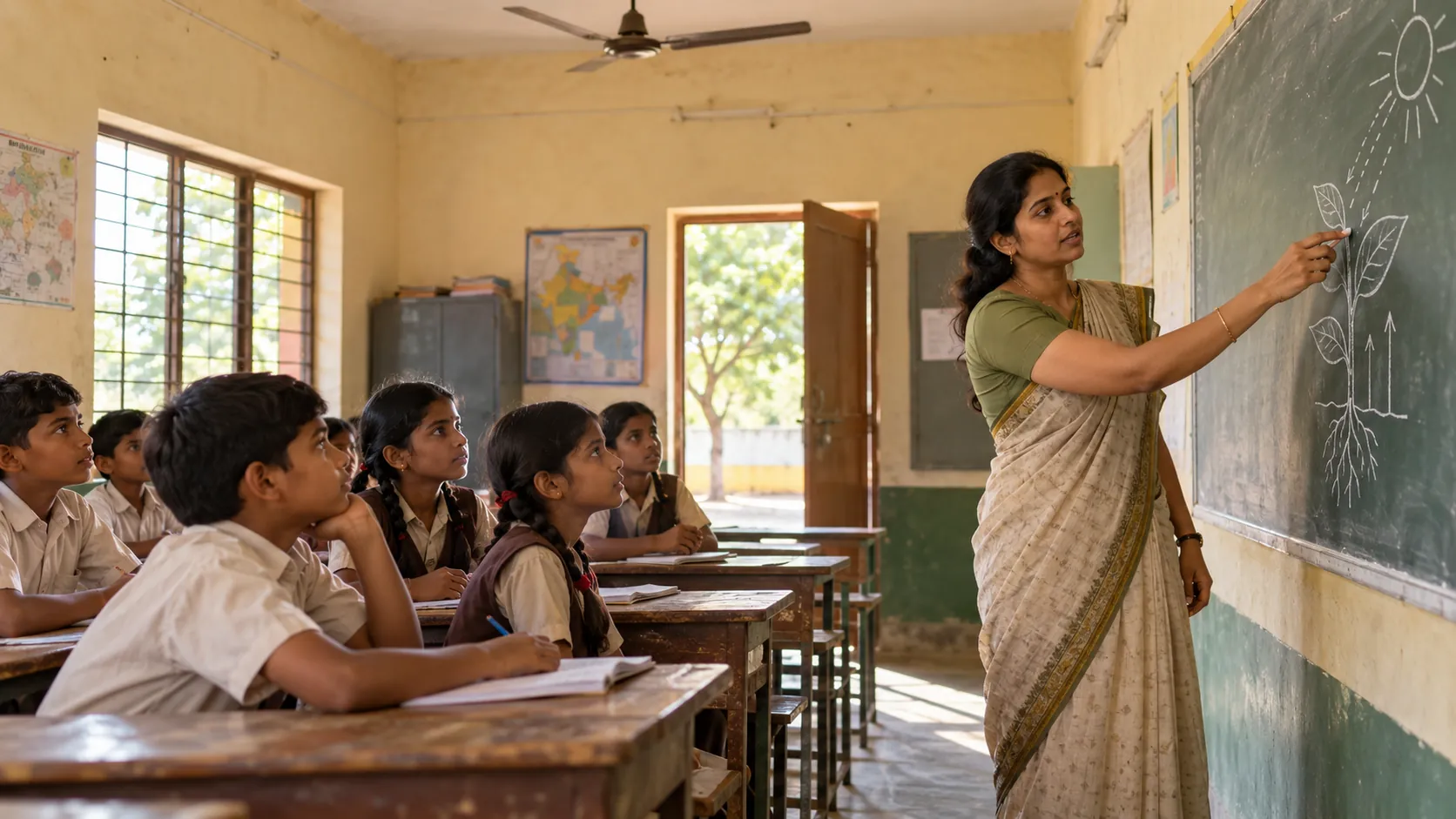
In many government and underserved schools, students learn science mainly from books. Robotics kits, guided practice and trained mentors may be out of reach, so children have fewer chances to build, test and discover what technology can do.
- Limited access to hands-on STEM activities
- Few opportunities to handle robotics kits
- Low awareness of emerging technology pathways
- A wider practical-learning gap between communities
02 · The solution
Take the experience to the school.
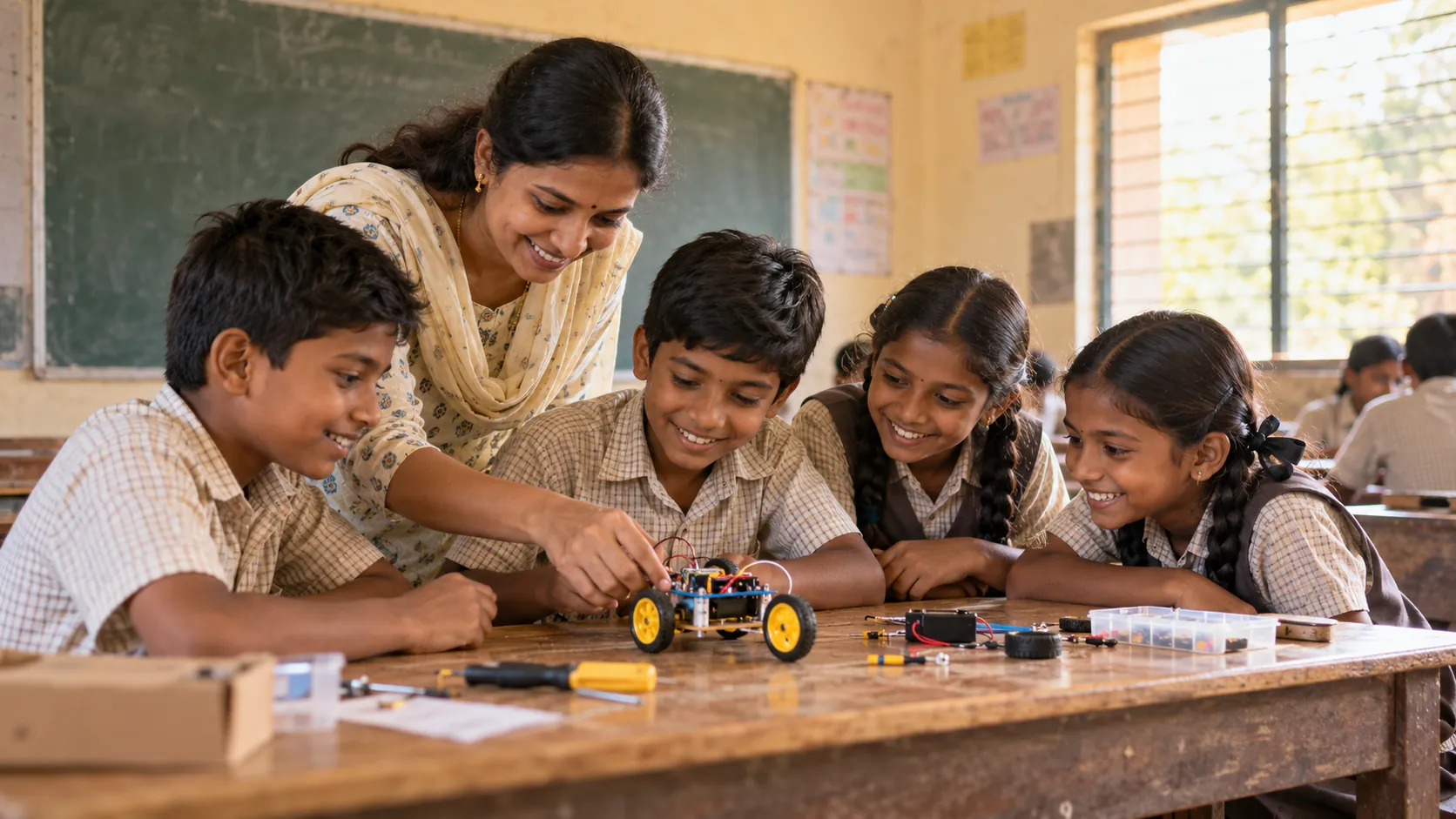
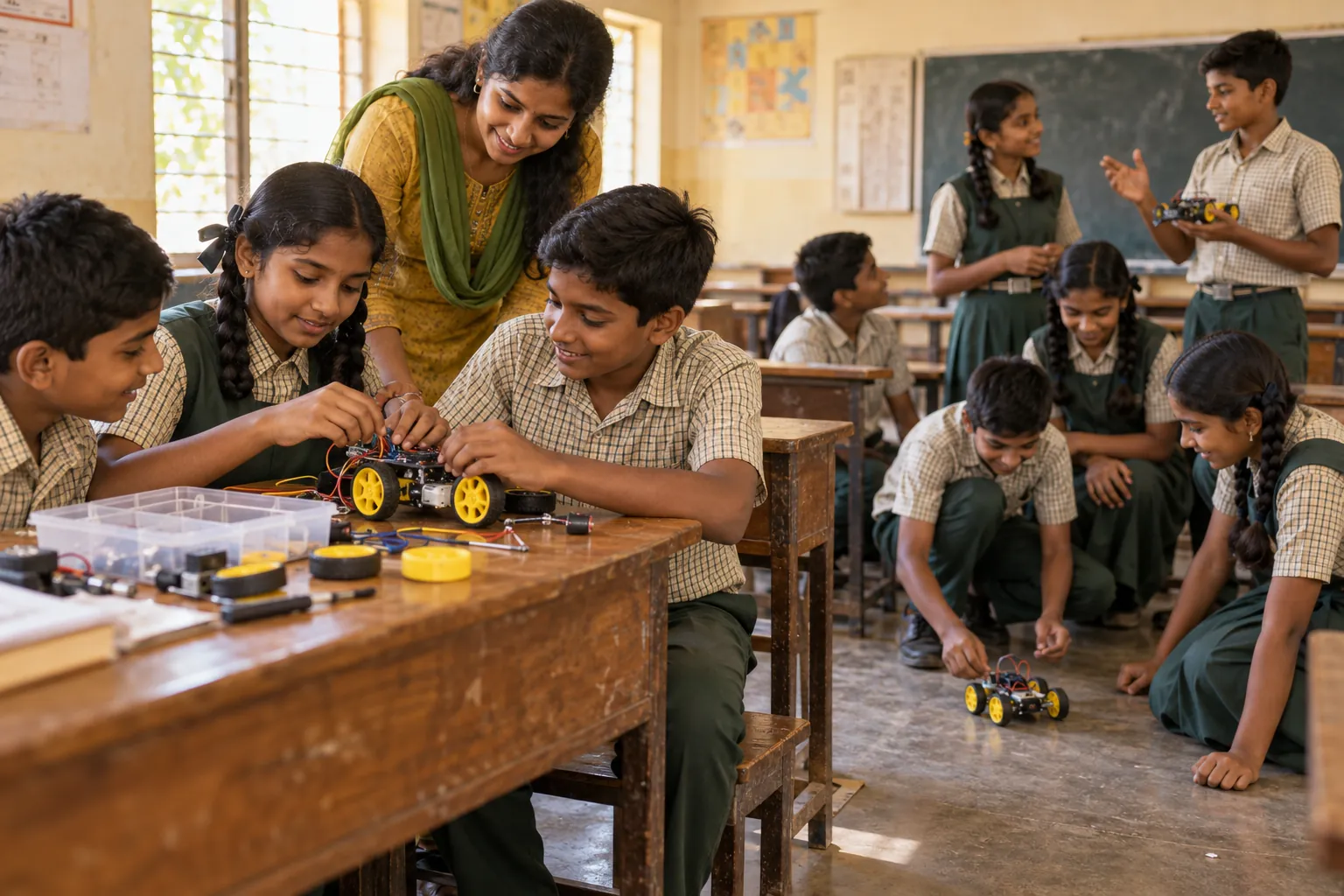
Samyak Sankalp uses CSR support to bring portable, age-appropriate kits and a trained facilitator into the school's existing classroom. Children learn in small groups, build simple models and see robotics in action—without requiring a permanent AI or Robotics Lab.
Portable basic kitsGuided practiceExisting classroomInclusive participation
03 · Who we are
School learning and technology experience, since 2013.
Smart Yantra Labs works with schools to make practical learning easier to plan and deliver. Samyak Sankalp brings that experience into CSR partnerships, coordinating with the funding partner, school and relevant authorities around an agreed programme scope.
Every project follows its own approvals and access requirements. A CSR partnership does not imply government endorsement or approval of a specific scheme.
04 · What we do
Turn CSR intent into a school-ready experience.
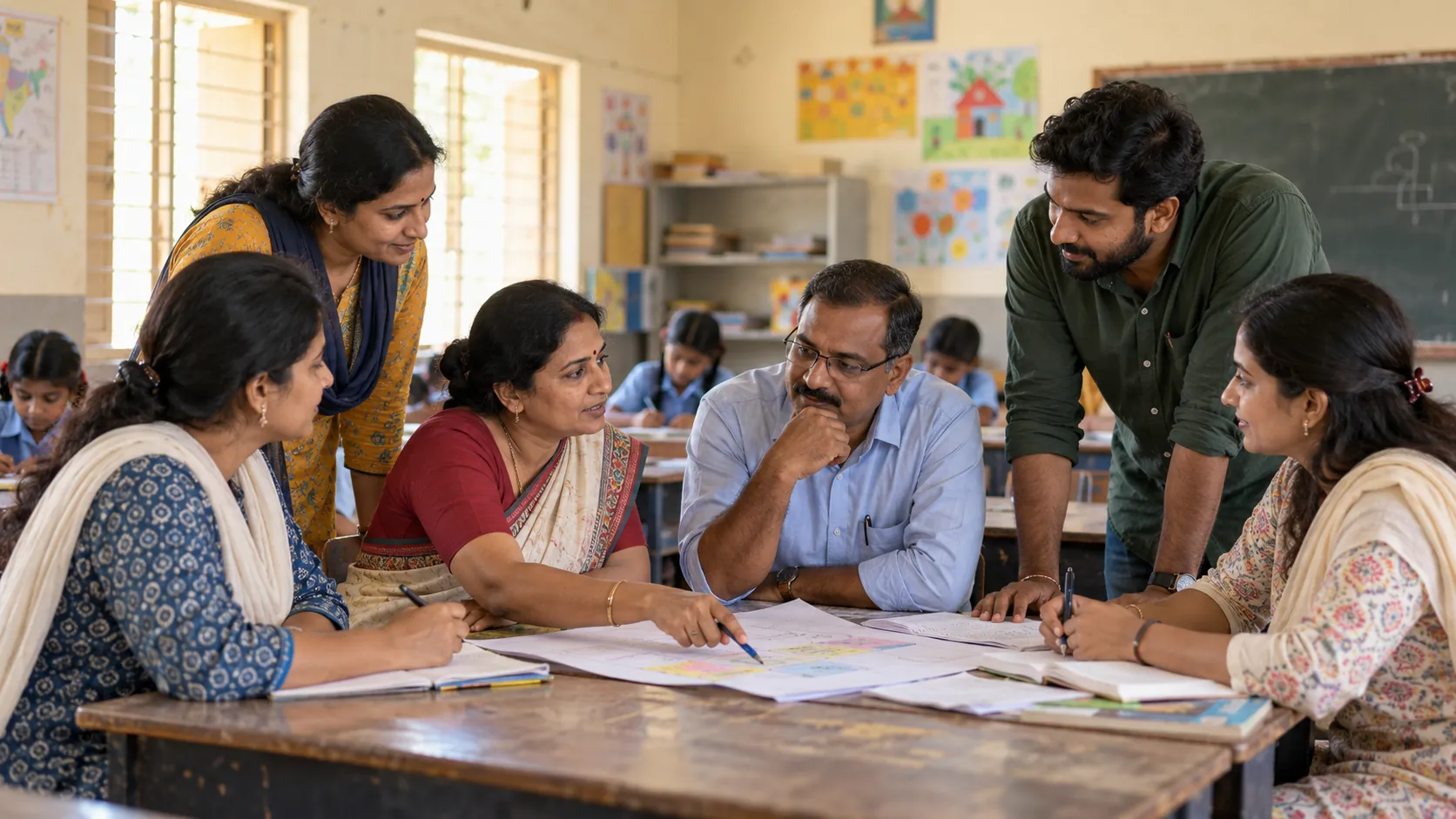
Each project is scoped around the participating schools, available classrooms, student groups and approved CSR priorities.
01Basic, reusable robotics and STEM kits for guided activities
02Baudhik Manthan workshops led by trained facilitators
03Teacher orientation and simple activity guides
04Student project sharing and partner-ready reporting
05 · How we implement
From school need to a well-run workshop.
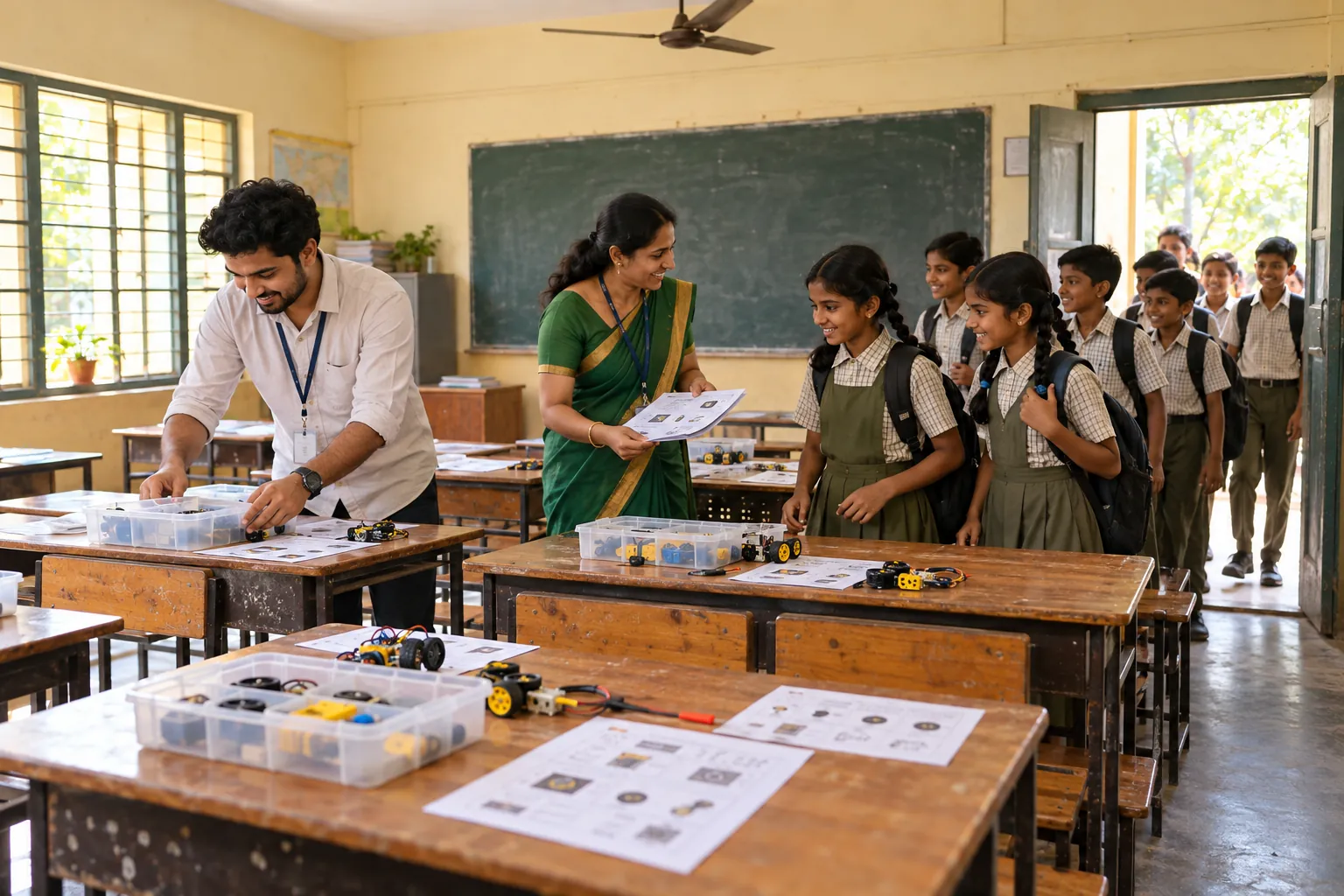
A clear delivery flow helps partners understand what is planned, where support is needed and how each activity will be documented.
Temporary workshop layout
Use the room the school already has.
Tables are arranged for short, supervised activity stations. Kits are packed away after the session so the classroom returns to normal use.
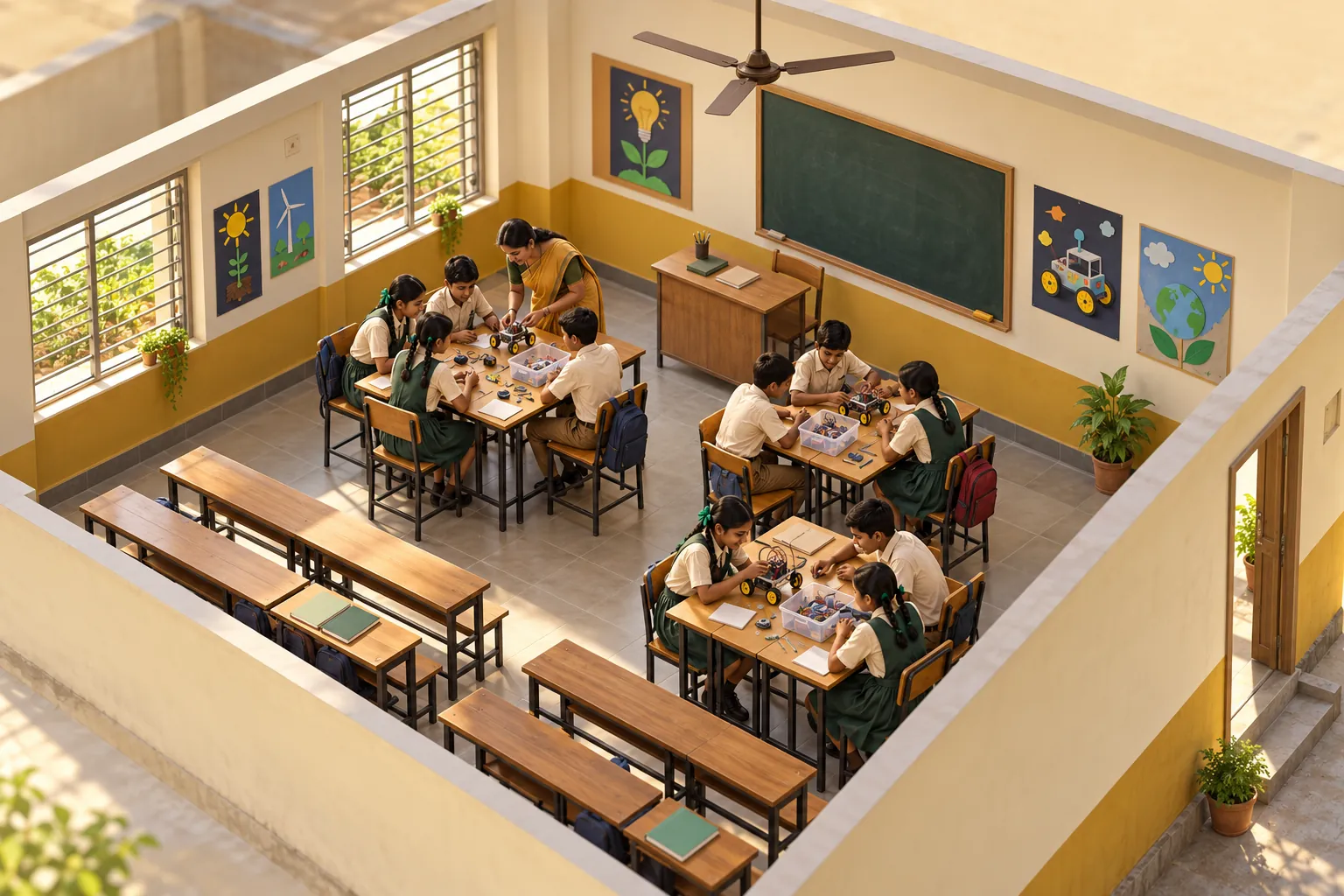
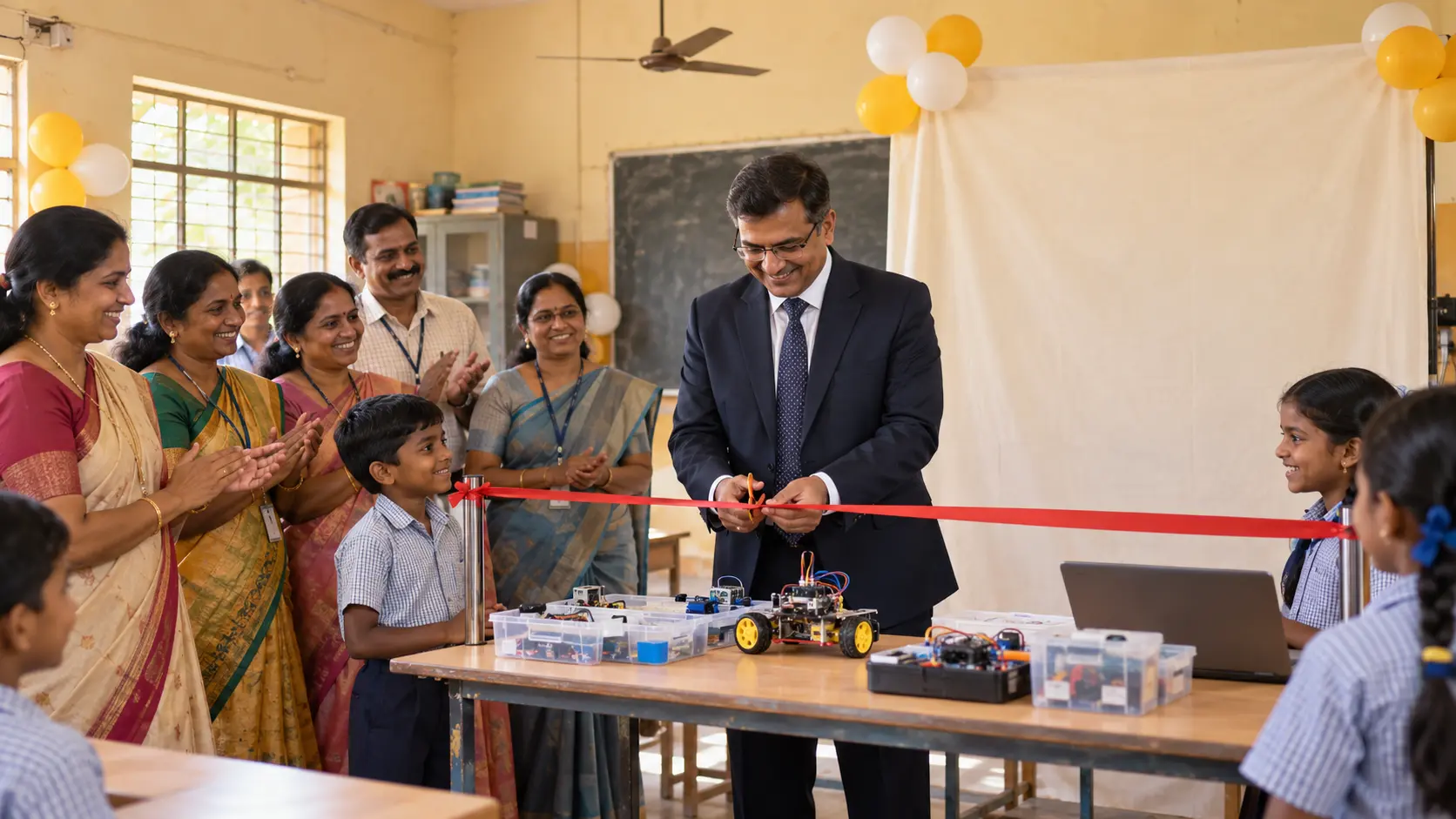
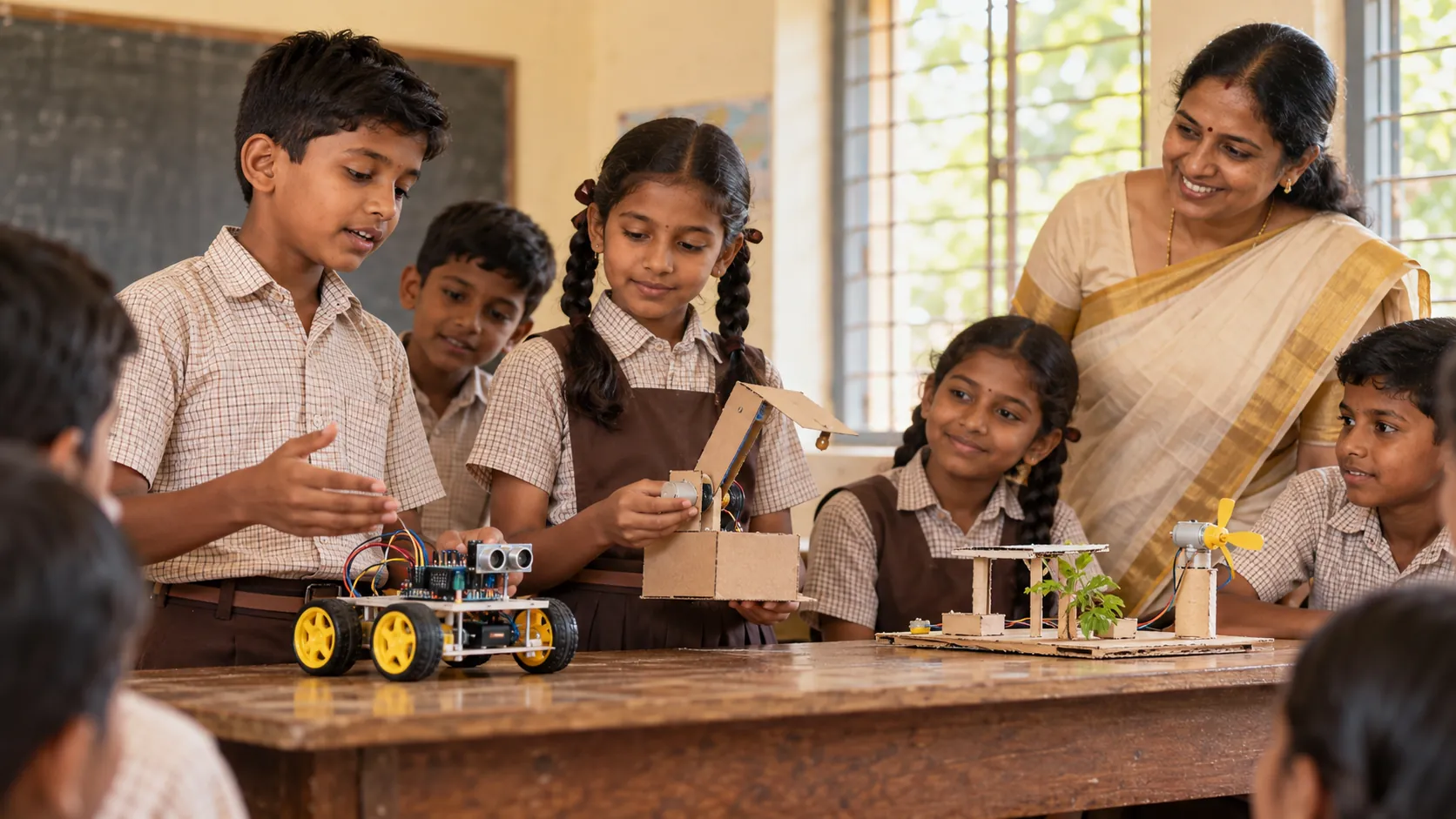
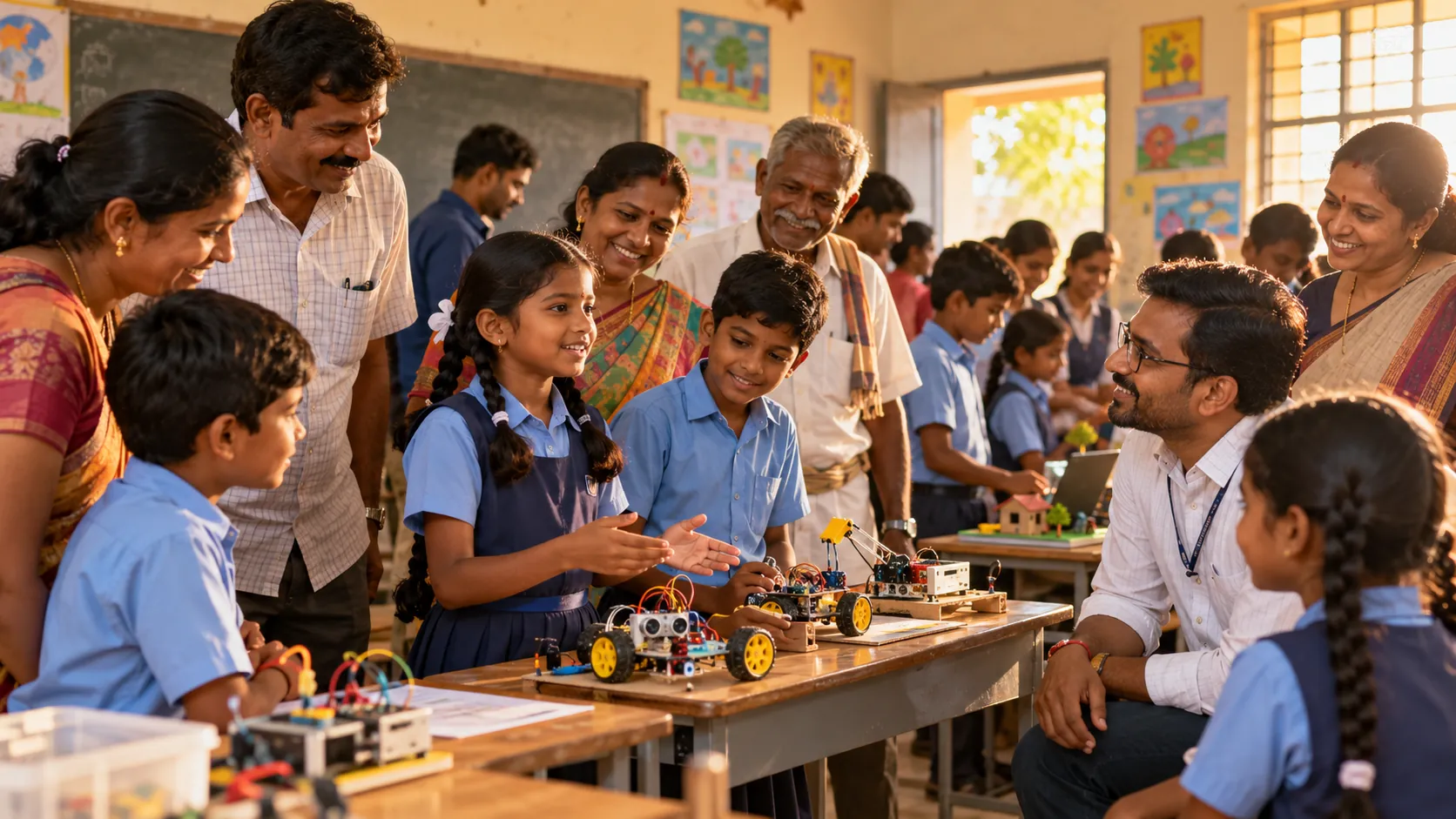
The layout and generated scenes are illustrative concepts, not photographs or verified evidence from a completed project. A permanent lab can be scoped separately only if requested and approved.
06 · Grade-wise learning
Right-sized activities, from curiosity to application.
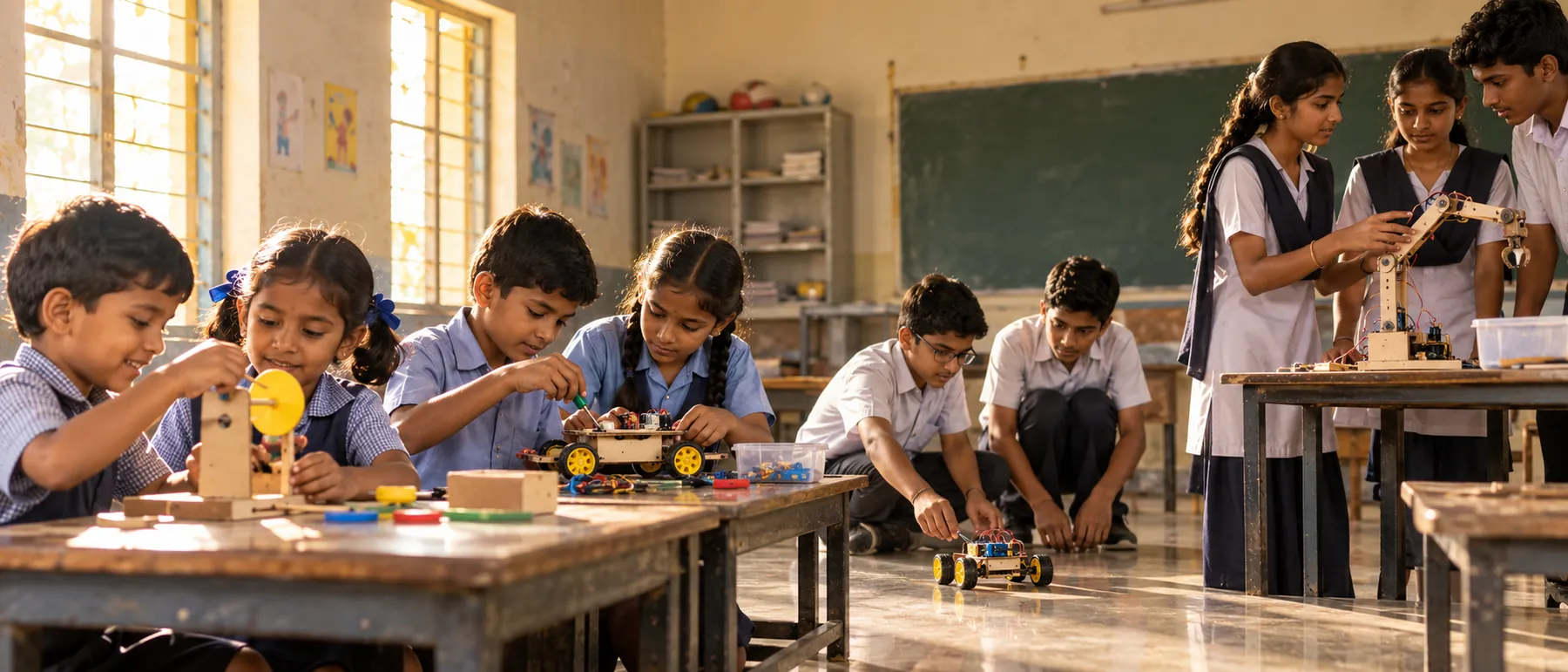
Workshops introduce ideas in a progressive, age-aware way. The school and programme team select activities that fit the students' experience and agreed scope.
Pre-primary–Class 2Curiosity, patterns and playful construction
Classes 3–5Simple machines, movement and guided teamwork
Classes 6–8Sensors, beginner coding and everyday problem-solving
Classes 9–10Electronics, automation and structured project work
Classes 11–12Applied technology, AI awareness and future pathways
07 · Why partner with us
Designed for access, participation and accountability.
01Starts with the school's real context and existing space
02Uses portable kits for practical, small-group participation
03Includes facilitator guidance and teacher involvement
04Defines outputs and reporting before delivery begins
Partners can shape a school-wise plan around their CSR priorities, approved budget and chosen geography.
08 · Impact and proof framework
Separate reported reach from future ambition.
Reach stated in the supplied brochure
These are brochure-reported figures supplied for this page; they are not independently verified here. Confirm current records before using them in formal CSR reporting.
Future goals stated in the brochure
These are forward-looking targets for the next three years, not completed outcomes.
What a project report can show
Agreed documentation may include school participation, workshop completion, kit utilisation, teacher orientation and examples of student work. Real testimonials, school stories and verified results should be added only when the partner has approved and supplied them.
Participation recordsActivity completionKit utilisationStudent work samples
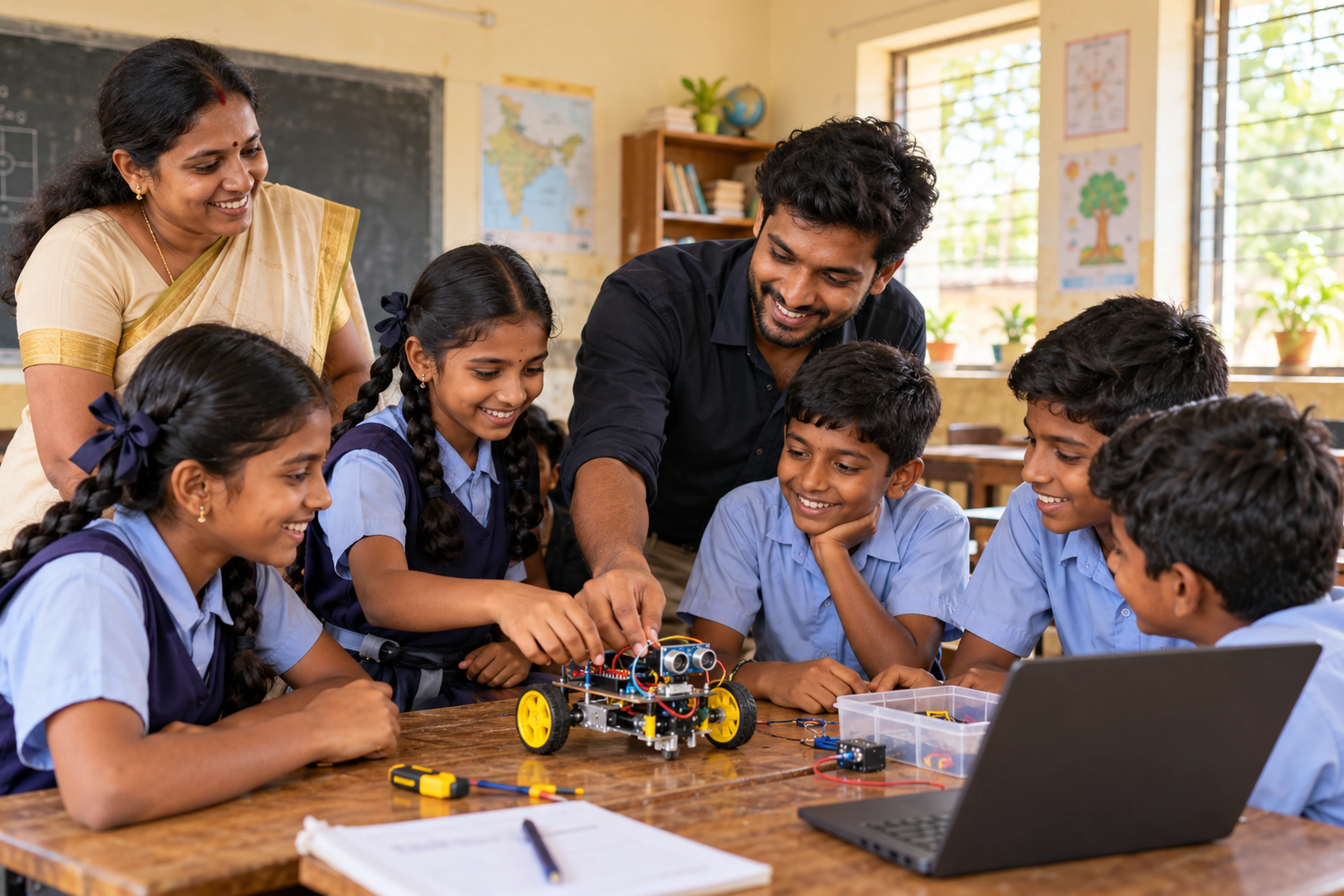
All generated photographs on this page are illustrative concepts. They do not represent named schools, actual beneficiaries or audited project evidence.
SAMYAK SANKALP • SOCIAL RETURN
Make CSR impact visible, measurable and reportable.
For CSR, the return is social impact: underserved schools reached, students enabled, teachers trained, labs utilised and outcomes documented for responsible reporting.
SMART YANTRA LABSPotential Value in Action
Schools & students served
Track verified beneficiary counts, geography and programme access.
Teachers trained
Teacher enablement helps infrastructure remain useful after installation.
Lab activity evidence
Track sessions, projects, attendance and equipment usage—not only installation photographs.
Impact evidence
Dashboards, project records, stories and periodic reviews support transparent CSR reporting.
FIXED PLANNING ASSUMPTIONS • NOT A CALCULATOR
Illustrative three-year investment & value
A read-only scenario using the same sample-school baseline across solution pages. It is an estimate for discussion, not a promise of admissions or revenue.
1,000 students₹2,000 monthly fee / student40:1 student–teacher ratio
*Scenario assumptions: 1% annual admissions uplift (10 students), ₹2,000 monthly fee and 30% contribution after variable costs. Three yearly cohorts are counted across 36 months. Growth is not attributed to this solution. Actual enrolment, vacant seats, retention, taxes, recurring and operating costs, implementation and final quotation change the outcome. For CSR/public programmes, recovery is not modelled.
VALUE BEYOND THE PURCHASE
Benefits the institution can potentially realise
Maximum value comes from implementation, teacher readiness, regular utilisation, review and visible outcomes—not hardware alone.
✓Rural/underserved school access
✓STEM/robotics awareness
✓Teacher training
✓Student projects
✓Lab utilisation tracking
✓CSR visibility
✓Impact documentation
✓Scalable district programmes
✓Community engagement
✓Sustainability planning
09 · Frequently asked questions
Clear answers before a project begins.
What is the Samyak Sankalp CSR program?
यह CSR और institutional partnership model है, जिसके माध्यम से government या low-resource schools में education, STEM, AI, robotics और teacher-support projects implement किए जा सकते हैं। इसका उपयोग करने का practical तरीका है: पहले students का level identify करें, फिर age-appropriate activity चुनें, short explanation दें, hands-on task कराएं और अंत में reflection या assessment लें। इस approach से product classroom activity बनता है, केवल display या equipment नहीं।
Can CSR funds support STEM and AI education?
Support plan में installation के बाद orientation, troubleshooting, consumable या kit replacement, software/content updates, warranty और escalation process साफ लिखा होना चाहिए। Purchase से पहले school को response time, responsible contact, exclusions और renewal cost लिखित में confirm कर लेना चाहिए।
What is the cost of one CSR lab?
The final price for Samyak Sankalp depends on capacity, selected modules or equipment, implementation, training and support. Share the institution type, location, participant or student count and available infrastructure so Smart Yantra Labs can provide an itemised proposal with inclusions, exclusions, taxes and service terms.
Are equipment, curriculum and training included?
Teacher training का उद्देश्य केवल equipment चलाना नहीं, बल्कि lesson शुरू करना, activity समझाना, students को guide करना, basic troubleshooting और learning evidence maintain करना है। Training को beginner-friendly रखा जा सकता है और school में नए teachers आने पर refresher support भी plan किया जा सकता है।
Can one company support multiple districts?
Support plan में installation के बाद orientation, troubleshooting, consumable या kit replacement, software/content updates, warranty और escalation process साफ लिखा होना चाहिए। Purchase से पहले school को response time, responsible contact, exclusions और renewal cost लिखित में confirm कर लेना चाहिए।
Can it support Hindi-medium rural schools?
Yes. Samyak Sankalp can be planned with Hindi and English support for training, guides and learner-facing delivery. The exact language coverage depends on the selected content and programme scope, so the required languages should be confirmed in the proposal before implementation.
How can I contact Samyak Sankalp?
हाँ, इसके लिए Smart Yantra Labs से demo या consultation request की जा सकती है। Request में school का city, classes, approximate student strength, available room और requirement लिख दें। इससे team सही demo, package और next-step proposal तैयार कर पाएगी।
What is Samyak Sankalp?
यह CSR और institutional partnership model है, जिसके माध्यम से government या low-resource schools में education, STEM, AI, robotics और teacher-support projects implement किए जा सकते हैं। इसका उपयोग करने का practical तरीका है: पहले students का level identify करें, फिर age-appropriate activity चुनें, short explanation दें, hands-on task कराएं और अंत में reflection या assessment लें। इस approach से product classroom activity बनता है, केवल display या equipment नहीं।
Who should use Samyak Sankalp?
Samyak Sankalp is designed for CSR / Government Schools. We confirm the right fit by reviewing learner age or grade, school goals, available infrastructure, teacher readiness and the outcome the institution wants to achieve.
What is included in Samyak Sankalp setup?
The confirmed Samyak Sankalp scope can include the required equipment or platform, learning resources, implementation, teacher orientation and post-launch support. The final bill of quantities, inclusions, exclusions, warranty and timeline are listed clearly in the school-specific proposal.
10 · Start a partnership
Help more students get their first hands-on opportunity.
Share your CSR priorities, preferred locations and intended reach. We can shape a practical school plan, activity scope and reporting approach with you.
Discuss a Samyak Sankalp project Know Your School's Health ReportPlanning guides
Research Samyak Sankalp before you decide.
CSR STEM Education Projects: From Deployment to Measurable Impact
Structure multi-school CSR programmes around access, teacher capacity and usable evidence.
Read guideSamyak Sankalp School Partnership Setup
Samyak Sankalp School Partnership Setup. A practical planning guide for schools evaluating community partnership.
Read guideSamyak Sankalp Reporting, Evidence and Support
Samyak Sankalp Reporting, Evidence and Support. A practical planning guide for schools evaluating impact reporting.
Read guide