Cyber Mind AI & Robotics Lab • 6 min
AI and Robotics Curriculum: Projects, Skills and School Evidence
Build a progression from coding and electronics to robotics projects while keeping assessment practical.

Sequence capability
Move from computational thinking and mechanisms to sensors, control systems, data and age-appropriate AI. Each stage should solve a real classroom challenge rather than introduce a disconnected tool.
Assess the build process
Use design briefs, code explanations, test logs, iteration notes and demonstrations. These show reasoning and teamwork more clearly than a finished model alone.
Teach responsible use
Include privacy, verification, bias, attribution and safe hardware handling in normal project routines. Responsibility should be part of making, not a separate poster.
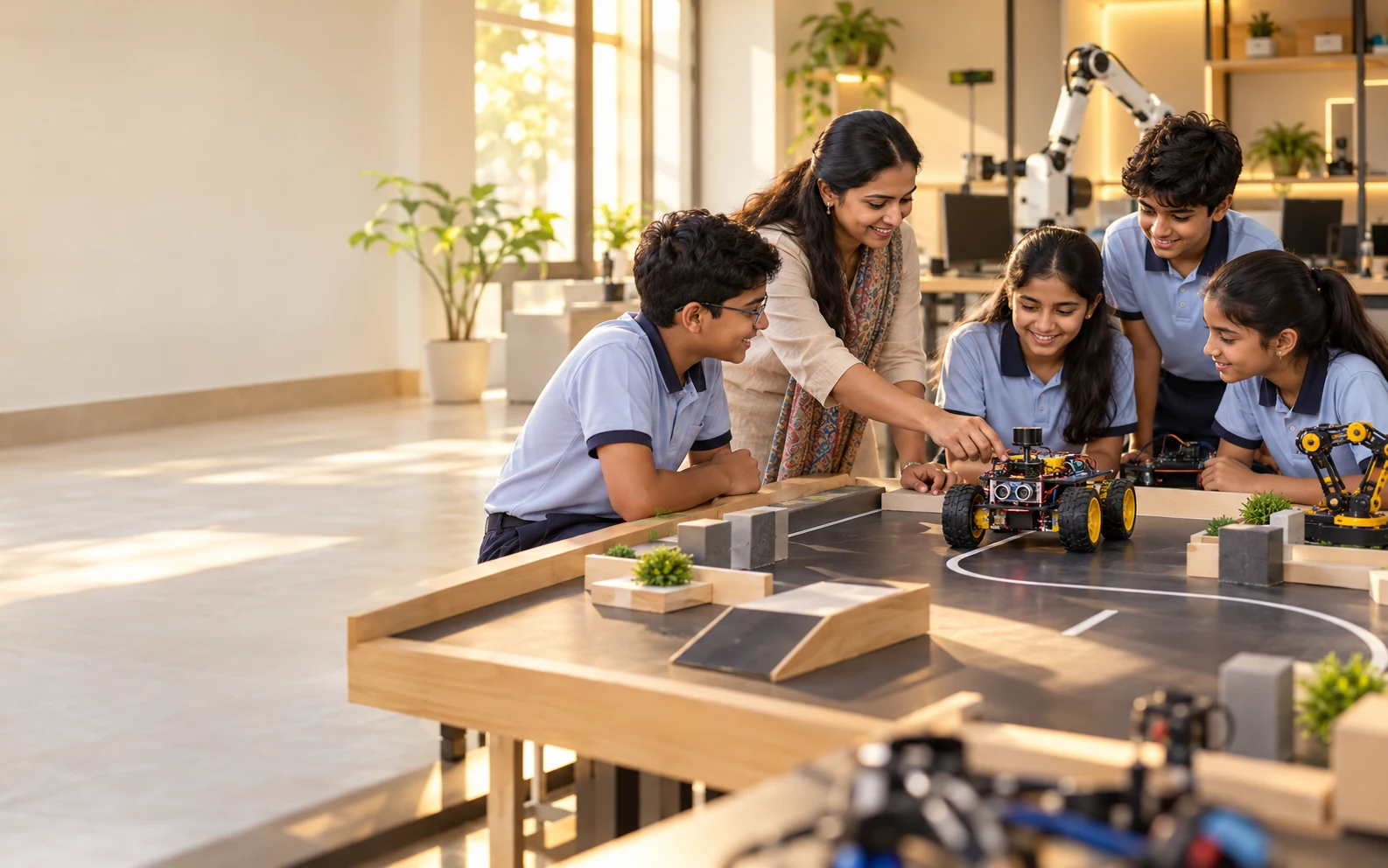
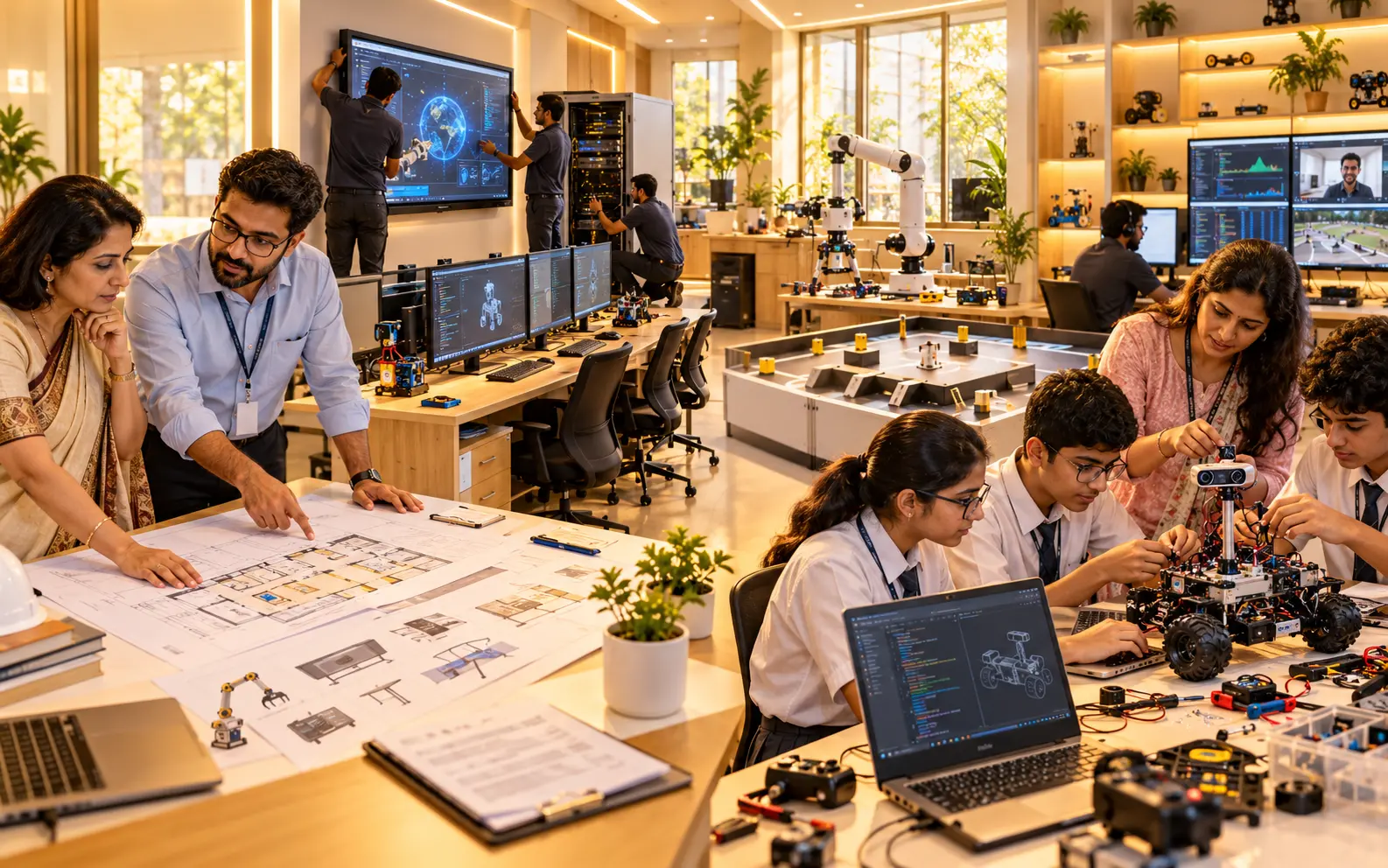
This learning and operations guide focuses on what happens after launch. For Cyber Mind AI & Robotics Lab, the practical test is whether teachers can repeat a progression from mechanisms and block coding to sensors, programming and age-appropriate AI and whether the school can review design briefs, code notes, test logs, demonstrations and student reflections.
Before approval, write down the assumptions that could change the result: room readiness, active learner capacity, staff ownership, timetable, connectivity, consumables, maintenance and review cadence. For this solution, pay particular attention to responsible AI use, privacy awareness, electrical safety and repairable equipment. Any policy, compatibility, security or outcome claim should be checked against the current source and the provider's written scope.
Implementation steps
Confirm users and intended outcomes
Document who will use Cyber Mind AI & Robotics Lab, how often and what teachers or school leaders need to observe.
Validate room and operating readiness
Check the space, timetable, infrastructure, supervision and responsible AI use, privacy awareness, electrical safety and repairable equipment.
Rehearse before full launch
Run a small pilot around a progression from mechanisms and block coding to sensors, programming and age-appropriate AI, record issues and adjust responsibilities.
Review and improve
Use design briefs, code notes, test logs, demonstrations and student reflections to decide what needs support, replenishment or a later phase.
Questions to settle before the next decision
- Is curriculum aligned with CBSE, ICSE and NEP 2020
- Can students prepare for competitions
- What are the benefits of Cyber Mind AI & Robotic Lab
- Is Cyber Mind AI & Robotic Lab aligned with CBSE, NEP 2020 and NCERT
| Review area | Evidence to request | Warning sign |
|---|---|---|
| Learning or operating fit | a progression from mechanisms and block coding to sensors, programming and age-appropriate AI | Equipment or features without a timetable workflow |
| Teacher and team readiness | Named owner, rehearsal and follow-up plan | One demonstration described as complete adoption |
| Evidence | design briefs, code notes, test logs, demonstrations and student reflections | Outcome promises without a measurement method |
| Commercial scope | Itemised inclusions, exclusions and recurring needs | A headline price with unstated assumptions |
Planning references
Primary guidance and further reading
These references support the policy and implementation principles in this guide. Confirm product-specific features, compatibility and commercial scope in the current written proposal and demonstration.
Planning questions
Frequently asked questions
Can robotics and AI be taught without advanced coding?
Yes. Block coding, unplugged logic, guided sensors and small data activities can establish strong foundations before text programming.
What evidence should schools collect?
Collect project briefs, journals, code or circuit notes, demonstrations, teacher observations and student reflections.
Is curriculum aligned with CBSE, ICSE and NEP 2020?
Projects can be mapped to CBSE, ICSE and NEP themes, but each board uses different documents; request a current written mapping for the school's grades and subjects.
Can students prepare for competitions?
Yes. Students can prepare through original problem selection, documented prototypes, testing and presentation practice, but participation or awards should never be guaranteed.
What are the benefits of Cyber Mind AI & Robotic Lab?
Cyber Mind builds a progression in coding, electronics, sensing, robotics and responsible AI while giving students practical opportunities to design, test and explain working systems.
Is Cyber Mind AI & Robotic Lab aligned with CBSE, NEP 2020 and NCERT?
The pathway can be mapped to CBSE, NCERT and NEP priorities in computational thinking and experiential learning; request the current mapping instead of assuming formal endorsement.
Related guides