
Robotics & AI • 6 min
Robotics and AI Lab Setup for Schools in India
A decision guide for curriculum, kits, AI tools, teacher training and annual growth.
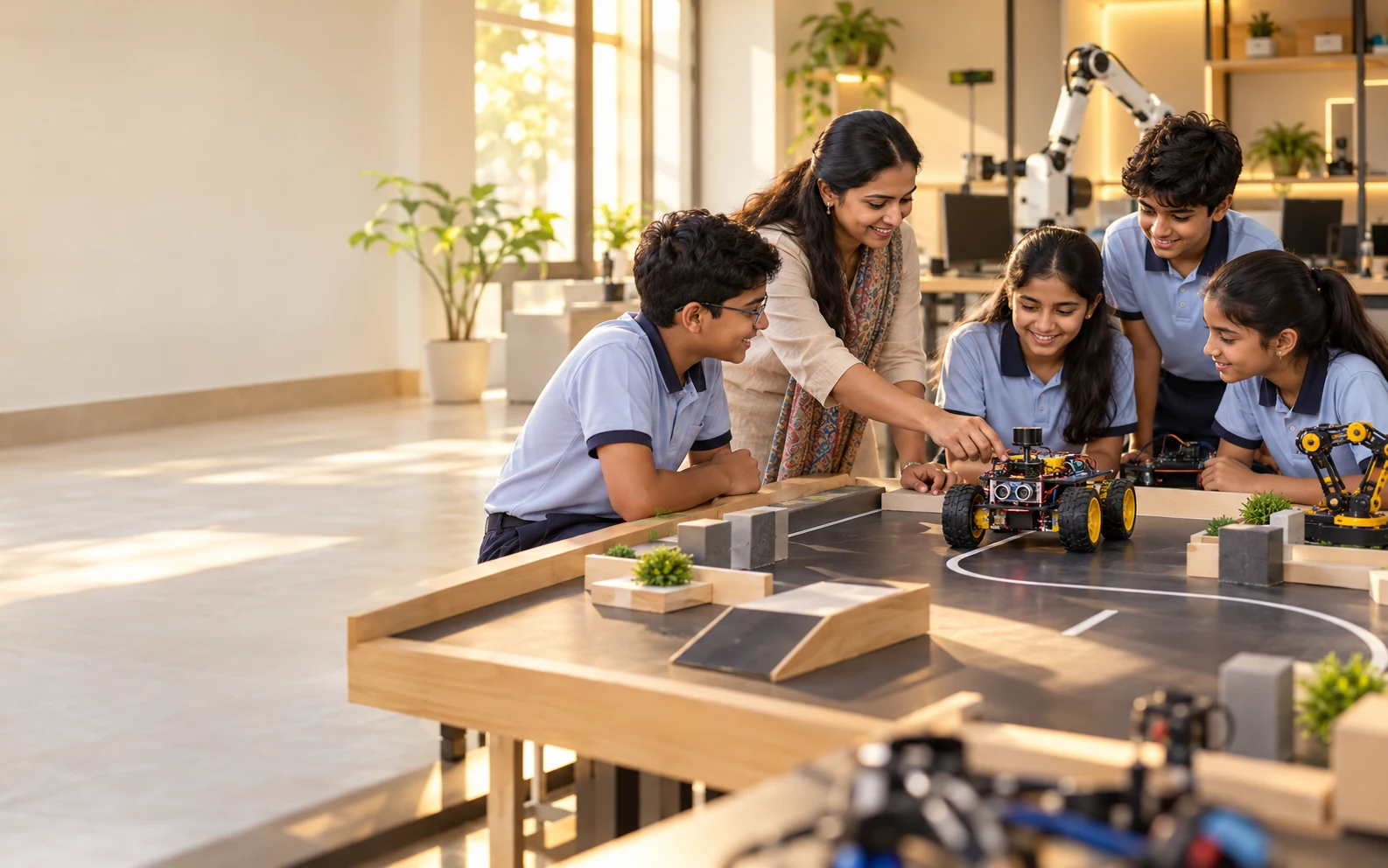
Design for progression
Young learners need guided mechanisms and block coding before advanced sensors, Python, AI and computer vision. A class-wise pathway prevents unused advanced equipment.
Choose reusable project resources
Prioritise durable, repairable kits and common components that support multiple projects instead of one demonstration.
Build teacher confidence
Include safe operations, lesson rehearsal, troubleshooting, assessment and refresher support in the programme scope.
This setup guide turns robotics lab setup into an operating plan for school leaders, computer teachers and robotics coordinators. It starts with users, timetable and space, then connects procurement to a progression from mechanisms and block coding to sensors, programming and age-appropriate AI. The result should be a usable weekly routine, not an impressive room that teachers struggle to run.
Before approval, write down the assumptions that could change the result: room readiness, active learner capacity, staff ownership, timetable, connectivity, consumables, maintenance and review cadence. For this solution, pay particular attention to responsible AI use, privacy awareness, electrical safety and repairable equipment. Any policy, compatibility, security or outcome claim should be checked against the current source and the provider's written scope.
Implementation steps
Confirm users and intended outcomes
Document who will use Cyber Mind AI & Robotics Lab, how often and what teachers or school leaders need to observe.
Validate room and operating readiness
Check the space, timetable, infrastructure, supervision and responsible AI use, privacy awareness, electrical safety and repairable equipment.
Rehearse before full launch
Run a small pilot around a progression from mechanisms and block coding to sensors, programming and age-appropriate AI, record issues and adjust responsibilities.
Review and improve
Use design briefs, code notes, test logs, demonstrations and student reflections to decide what needs support, replenishment or a later phase.
Questions to settle before the next decision
- How do I set up a robotics lab
- What equipment is required
- Can non-technical teachers teach robotics
- How many periods per week are needed
- How does Cyber Mind AI & Robotic Lab work in a school
| Review area | Evidence to request | Warning sign |
|---|---|---|
| Learning or operating fit | a progression from mechanisms and block coding to sensors, programming and age-appropriate AI | Equipment or features without a timetable workflow |
| Teacher and team readiness | Named owner, rehearsal and follow-up plan | One demonstration described as complete adoption |
| Evidence | design briefs, code notes, test logs, demonstrations and student reflections | Outcome promises without a measurement method |
| Commercial scope | Itemised inclusions, exclusions and recurring needs | A headline price with unstated assumptions |
Planning references
Primary guidance and further reading
These references support the policy and implementation principles in this guide. Confirm product-specific features, compatibility and commercial scope in the current written proposal and demonstration.
Planning questions
Frequently asked questions
Which classes can use a robotics and AI lab?
A well-designed programme can serve Classes 1–12 through age-appropriate pathways, from simple mechanisms to AI-enabled capstones.
How is final lab cost decided?
Cost depends on student capacity, room readiness, kit depth, computing, furniture, curriculum, training and support.
How do I set up a robotics lab?
Set up a robotics lab by defining grade progression and batch capacity first, then validate room, power, computing, storage, kits, safety, curriculum, teacher training and support.
What equipment is required?
A school robotics lab usually needs reusable mechanical parts, controllers, sensors, motors, electronics, computing devices, tools, chargers, storage and enough working sets for planned groups.
Can non-technical teachers teach robotics?
Yes. Non-technical teachers can facilitate robotics after hands-on induction, lesson rehearsal, safety practice and access to clear guides and troubleshooting support.
How many periods per week are needed?
Many schools begin with one regular period per week and add project blocks near showcases. The correct frequency depends on project depth, class size and timetable capacity.
How does Cyber Mind AI & Robotic Lab work in a school?
The school runs grade-appropriate project cycles with shared kits, trained teachers and documented evidence, progressing from guided builds to increasingly independent robotics and AI tasks.
Related guides
Continue planning this solution

AI and Robotics Curriculum: Projects, Skills and School Evidence
Build a progression from coding and electronics to robotics projects while keeping assessment practical.
Robotics and AI Lab Cost, Providers and Ongoing Support
Compare robotics and AI lab proposals by learning pathway, capacity, equipment, teacher support and renewal needs.