
Neev Spark Explorer Lab • 6 min
Primary STEM Exploration: Projects, Outcomes and Evidence
Use practical projects to build observation, collaboration and explanation skills across primary grades.
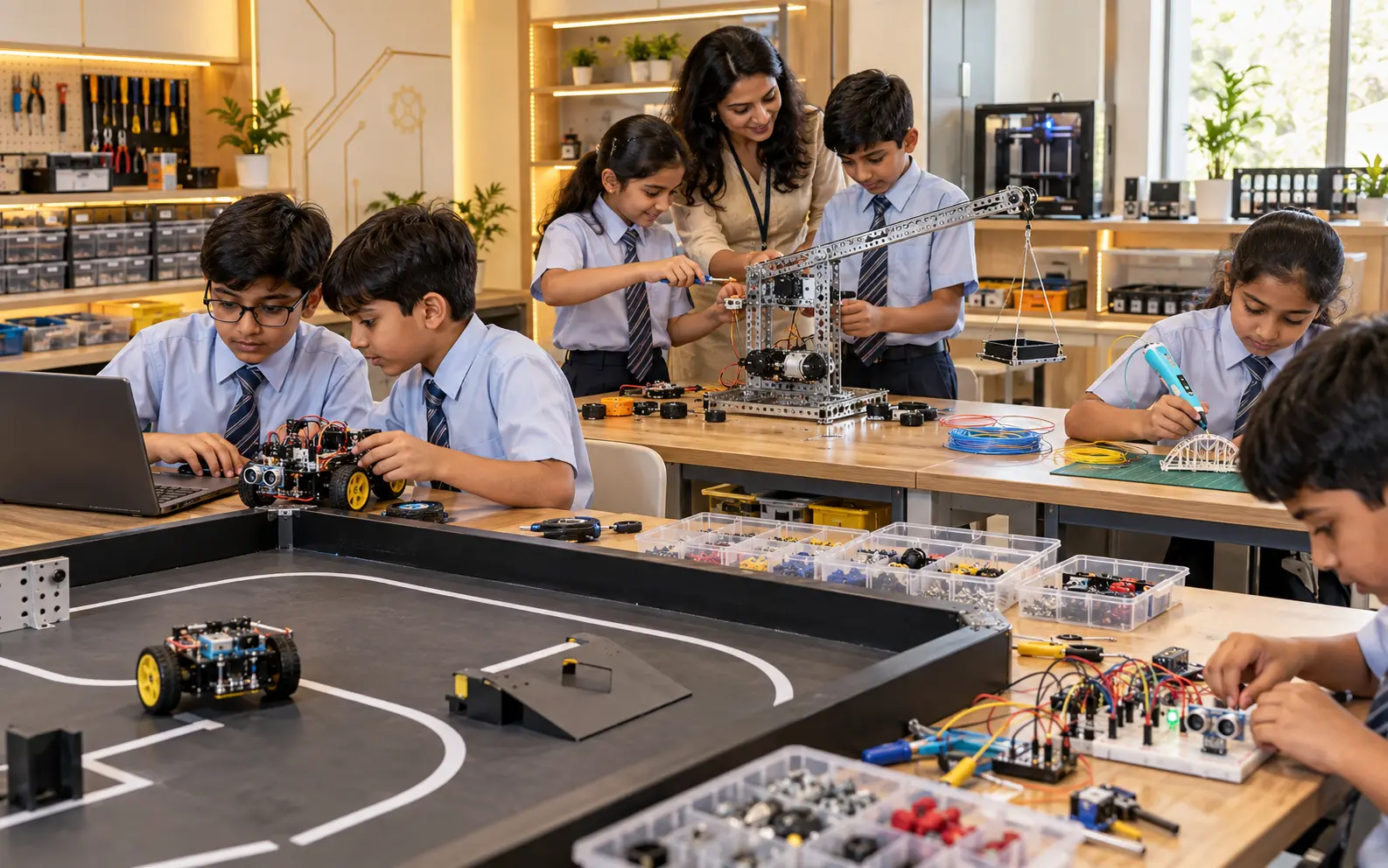
Design a progression
Start with noticing and classifying, then move to measuring, building, testing and improving. A progression makes the lab useful across multiple grades rather than repeating the same demonstration.
Make the thinking visible
Ask learners to draw an idea, record a prediction, test it and explain what changed. Their journals and models are useful evidence for teachers and families.
Review inclusion and access
Offer multiple roles, tactile options, visual instructions and enough time for learners who need a different route into the activity. Practical learning works best when participation is designed, not assumed.
This learning and operations guide focuses on what happens after launch. For Neev Spark Explorer Lab, the practical test is whether teachers can repeat small-group discovery, block coding, simple mechanisms and cross-curricular making and whether the school can review activity journals, annotated models, group explanations and teacher rubrics.
Before approval, write down the assumptions that could change the result: room readiness, active learner capacity, staff ownership, timetable, connectivity, consumables, maintenance and review cadence. For this solution, pay particular attention to safe tools, visible instructions, balanced group roles and manageable workstation capacity. Any policy, compatibility, security or outcome claim should be checked against the current source and the provider's written scope.
Implementation steps
Confirm users and intended outcomes
Document who will use Neev Spark Explorer Lab, how often and what teachers or school leaders need to observe.
Validate room and operating readiness
Check the space, timetable, infrastructure, supervision and safe tools, visible instructions, balanced group roles and manageable workstation capacity.
Rehearse before full launch
Run a small pilot around small-group discovery, block coding, simple mechanisms and cross-curricular making, record issues and adjust responsibilities.
Review and improve
Use activity journals, annotated models, group explanations and teacher rubrics to decide what needs support, replenishment or a later phase.
Questions to settle before the next decision
- Which robotics activities suit Classes 1 to 5
- At what age should children start coding
- How does STEM improve maths and science
- Is it aligned with CBSE and NCERT
- Do students learn block coding, electronics and sensors
- What are the benefits of Neev Spark Explorer Lab
- Is Neev Spark Explorer Lab aligned with CBSE, NEP 2020 and NCERT
| Review area | Evidence to request | Warning sign |
|---|---|---|
| Learning or operating fit | small-group discovery, block coding, simple mechanisms and cross-curricular making | Equipment or features without a timetable workflow |
| Teacher and team readiness | Named owner, rehearsal and follow-up plan | One demonstration described as complete adoption |
| Evidence | activity journals, annotated models, group explanations and teacher rubrics | Outcome promises without a measurement method |
| Commercial scope | Itemised inclusions, exclusions and recurring needs | A headline price with unstated assumptions |
Planning references
Primary guidance and further reading
These references support the policy and implementation principles in this guide. Confirm product-specific features, compatibility and commercial scope in the current written proposal and demonstration.
Planning questions
Frequently asked questions
What outcomes can a primary exploration lab support?
It can support observation, communication, collaboration, early engineering thinking, confidence with materials and evidence-based explanation.
How can schools show impact?
Use activity records, project journals, learner explanations, teacher observations and showcases alongside normal classroom assessment.
Which robotics activities suit Classes 1 to 5?
Classes 1–5 can progress from mechanisms, patterns and block coding to simple circuits, sensors and guided robots, with short projects tied to science and mathematics topics.
At what age should children start coding?
Children can begin computational thinking in the primary years through sequences, patterns and block-based tools; text coding should follow when reading, logic and typing readiness are sufficient.
How does STEM improve maths and science?
STEM can make maths and science concepts visible through measuring, predicting, building and testing. Improvement depends on curriculum links, teacher questioning and repeated use, not equipment alone.
Is it aligned with CBSE and NCERT?
Activities can be mapped to current CBSE and NCERT learning goals, but the school should review the written mapping for its grades, subjects and current curriculum.
Do students learn block coding, electronics and sensors?
Yes, the pathway can include block coding, basic electronics and introductory sensors, introduced gradually through age-appropriate projects rather than all at once.
What are the benefits of Neev Spark Explorer Lab?
Neev Spark develops primary learners' observation, sequencing, construction, coding, communication and teamwork through guided projects connected to classroom concepts.
Is Neev Spark Explorer Lab aligned with CBSE, NEP 2020 and NCERT?
The programme can support CBSE, NCERT and NEP priorities through experiential and skill-based learning, but the school should verify a current grade-wise curriculum map.
Related guides
Continue planning this solution
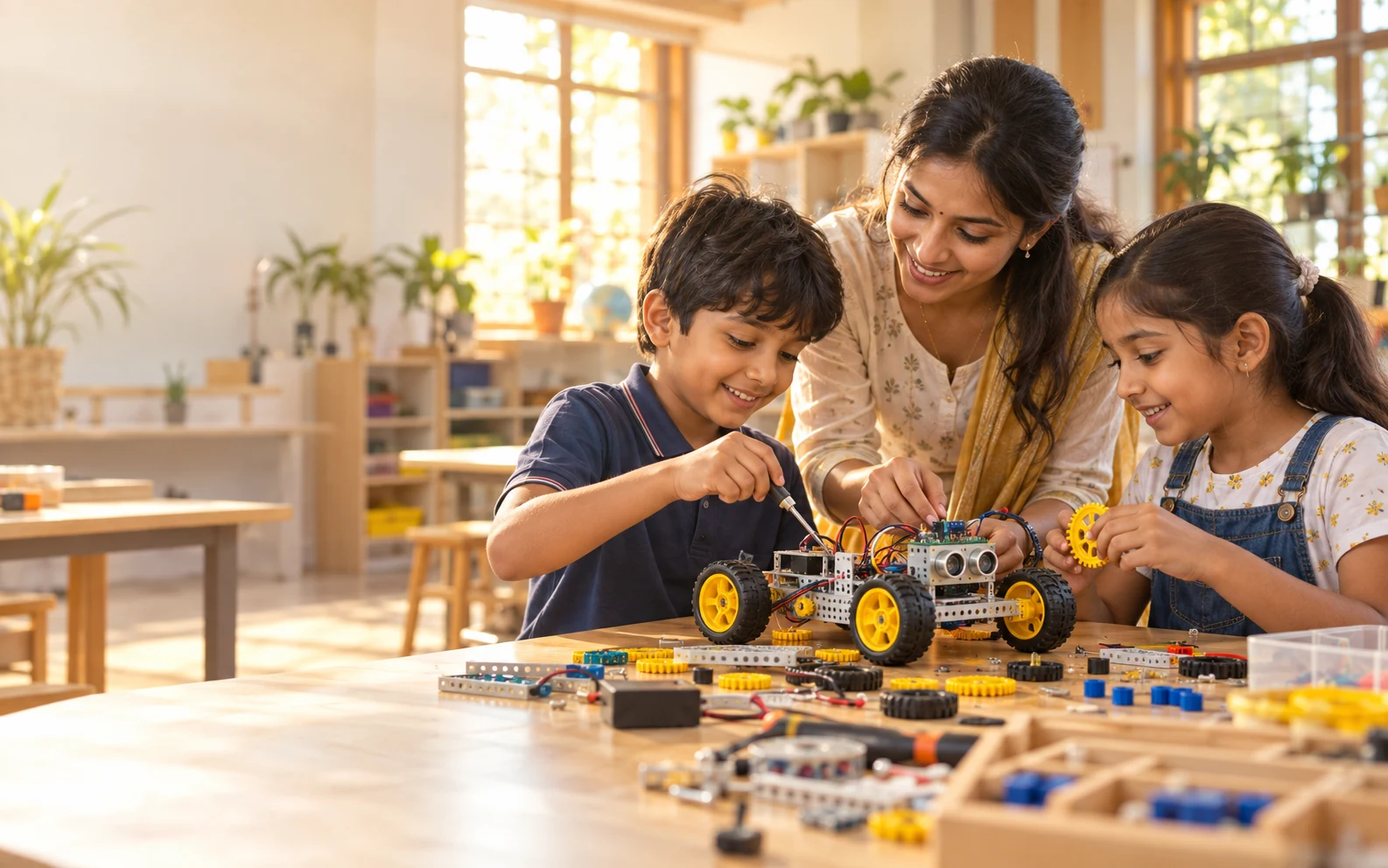
Neev Spark Explorer Lab Setup for Primary Schools
Create a primary-school exploration lab that moves from curiosity to structured making and explanation.
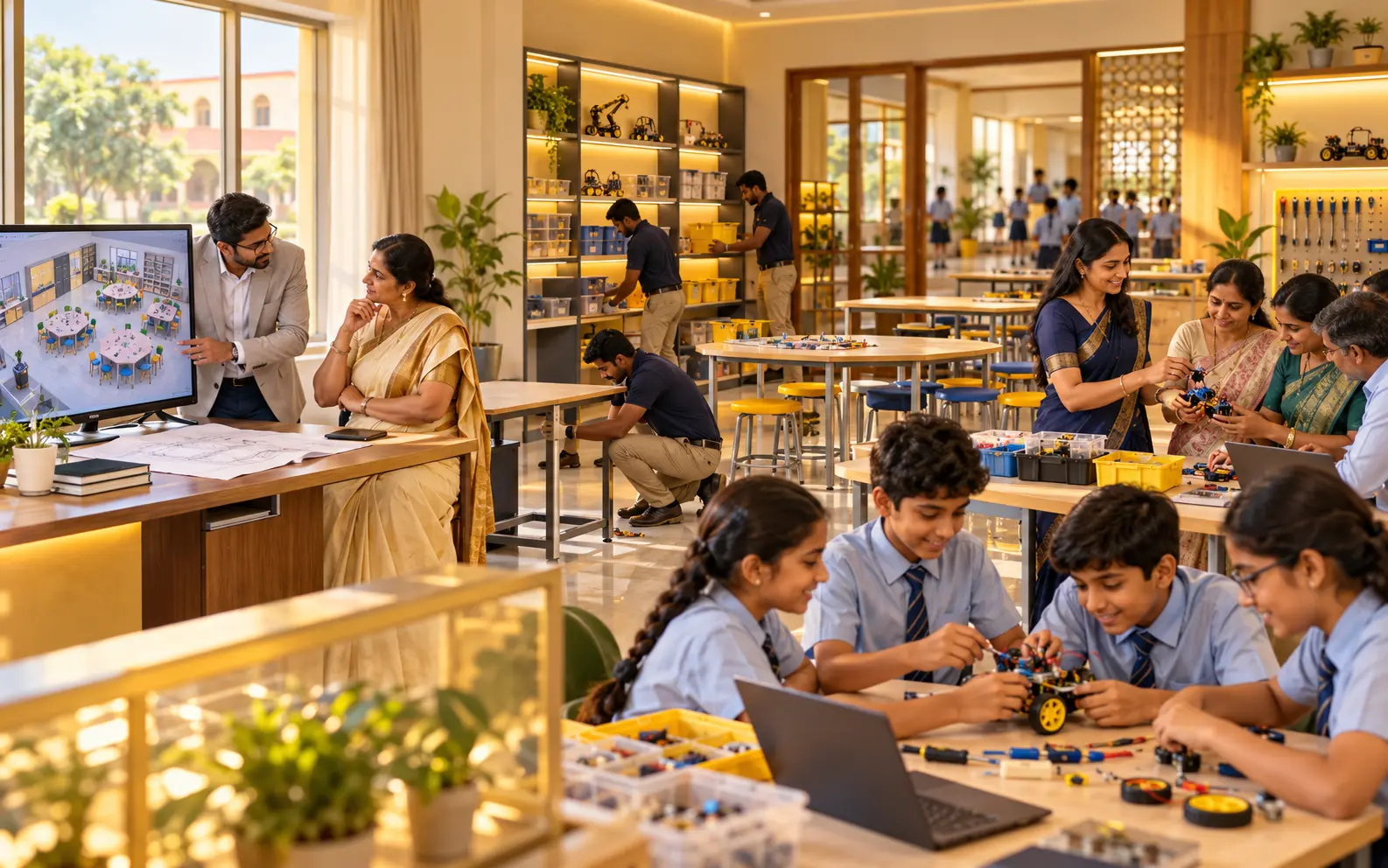
Choosing a Primary Explorer Lab: Equipment, Pricing and Support
A practical buying checklist for schools comparing primary exploration lab providers and implementation plans.