
Quantum Matrix STEM & Robotics • 6 min
Quantum Matrix STEM and Robotics Learning Pathway
Connect investigation, engineering design and robotics projects across middle and secondary school.

Start with a shared design cycle
Frame problems, research constraints, sketch ideas, build, test and improve. A shared cycle gives different projects a common language across grades.
Use increasing complexity
Younger groups can explore structures and simple mechanisms, while older learners add sensors, data, automation and documented performance criteria.
Link projects to school evidence
Use design notebooks, prototype tests, exhibitions and student explanations to show how practical work supports academic understanding.
This learning and operations guide focuses on what happens after launch. For Quantum Matrix STEM & Robotics, the practical test is whether teachers can repeat investigation, engineering design, electronics, robotics and documented prototype testing and whether the school can review design notebooks, measurement records, prototype tests and exhibitions.
Before approval, write down the assumptions that could change the result: room readiness, active learner capacity, staff ownership, timetable, connectivity, consumables, maintenance and review cadence. For this solution, pay particular attention to tool control, ventilation, power planning, storage and teacher supervision. Any policy, compatibility, security or outcome claim should be checked against the current source and the provider's written scope.
Implementation steps
Confirm users and intended outcomes
Document who will use Quantum Matrix STEM & Robotics, how often and what teachers or school leaders need to observe.
Validate room and operating readiness
Check the space, timetable, infrastructure, supervision and tool control, ventilation, power planning, storage and teacher supervision.
Rehearse before full launch
Run a small pilot around investigation, engineering design, electronics, robotics and documented prototype testing, record issues and adjust responsibilities.
Review and improve
Use design notebooks, measurement records, prototype tests and exhibitions to decide what needs support, replenishment or a later phase.
Questions to settle before the next decision
- Why should schools introduce STEM education
- What experiments are conducted
- Does it include coding, electronics, IoT and 3D printing
- Is curriculum aligned with NEP 2020 and CBSE
- What are the benefits of Quantum Matrix STEM & Robotics
- Is Quantum Matrix STEM & Robotics aligned with CBSE, NEP 2020 and NCERT
| Review area | Evidence to request | Warning sign |
|---|---|---|
| Learning or operating fit | investigation, engineering design, electronics, robotics and documented prototype testing | Equipment or features without a timetable workflow |
| Teacher and team readiness | Named owner, rehearsal and follow-up plan | One demonstration described as complete adoption |
| Evidence | design notebooks, measurement records, prototype tests and exhibitions | Outcome promises without a measurement method |
| Commercial scope | Itemised inclusions, exclusions and recurring needs | A headline price with unstated assumptions |
Planning references
Primary guidance and further reading
These references support the policy and implementation principles in this guide. Confirm product-specific features, compatibility and commercial scope in the current written proposal and demonstration.
Planning questions
Frequently asked questions
How do STEM and robotics fit together?
STEM projects provide the problem and engineering process; robotics can add control, sensing, automation and an opportunity to test a working solution.
How can teachers assess projects?
Assess the brief, reasoning, safe process, prototype performance, iteration and explanation rather than appearance alone.
Why should schools introduce STEM education?
STEM education helps learners connect science and mathematics to investigation, design and testing. Its value comes from repeated problem-solving and reflection, not from equipment ownership alone.
What experiments are conducted?
Experiments can include measurement, forces, energy, structures, environment, electronics, sensors, automation and robotics, selected for the school's grades and curriculum.
Does it include coding, electronics, IoT and 3D printing?
Those areas can be included in a phased pathway. The proposal should state the exact coding tools, electronics, IoT components and 3D-printing scope rather than imply every package includes them.
Is curriculum aligned with NEP 2020 and CBSE?
Projects can support CBSE and NEP experiential-learning priorities, but the school should approve a current project-to-curriculum map for its grades and subjects.
What are the benefits of Quantum Matrix STEM & Robotics?
Quantum Matrix connects investigation, engineering design, electronics and robotics, helping learners measure, prototype, test, improve and communicate solutions across subjects.
Is Quantum Matrix STEM & Robotics aligned with CBSE, NEP 2020 and NCERT?
The programme can be mapped to CBSE, NCERT and NEP skill and experiential-learning goals; the school should retain the current mapping and implementation records.
Related guides
Continue planning this solution
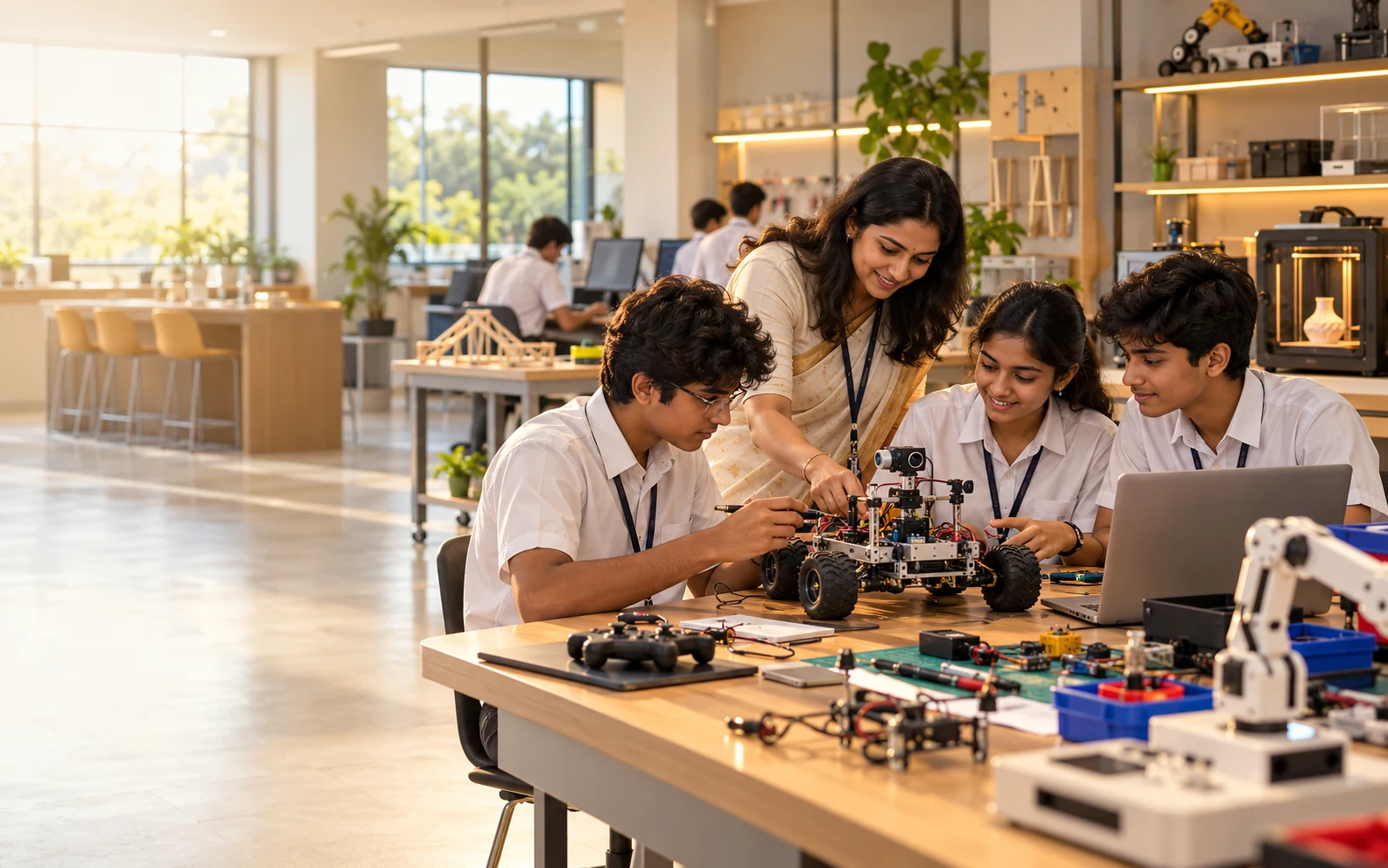
STEM Lab Setup: Equipment, Space, Curriculum and Cost Factors
Understand what changes a STEM lab budget and how to protect learning outcomes.
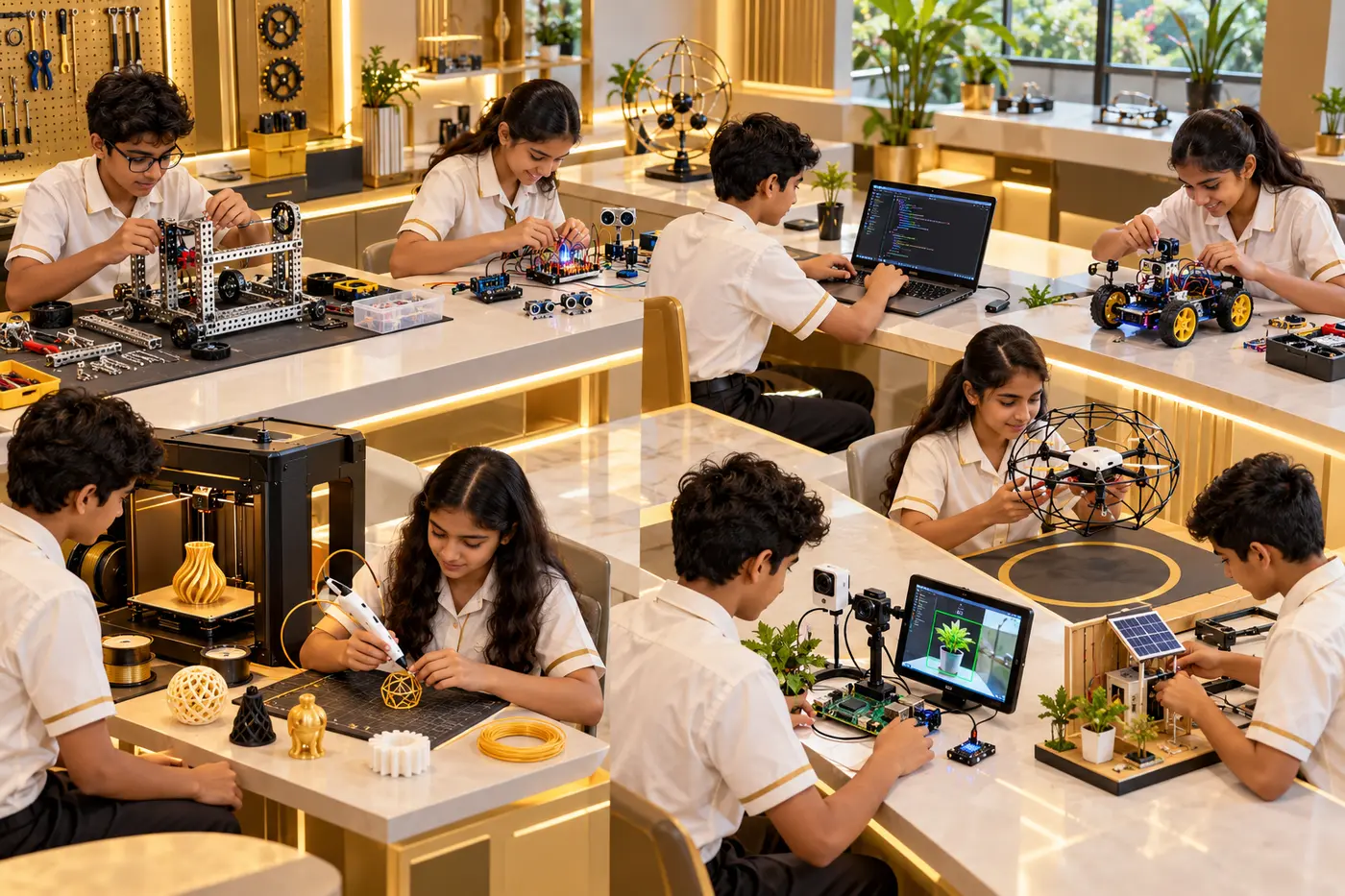
Choosing a STEM and Robotics Lab: Cost, Equipment and Support
A buying framework for schools comparing STEM lab providers, project depth and support after installation.