
STEM • 6 min
STEM Lab Setup: Equipment, Space, Curriculum and Cost Factors
Understand what changes a STEM lab budget and how to protect learning outcomes.
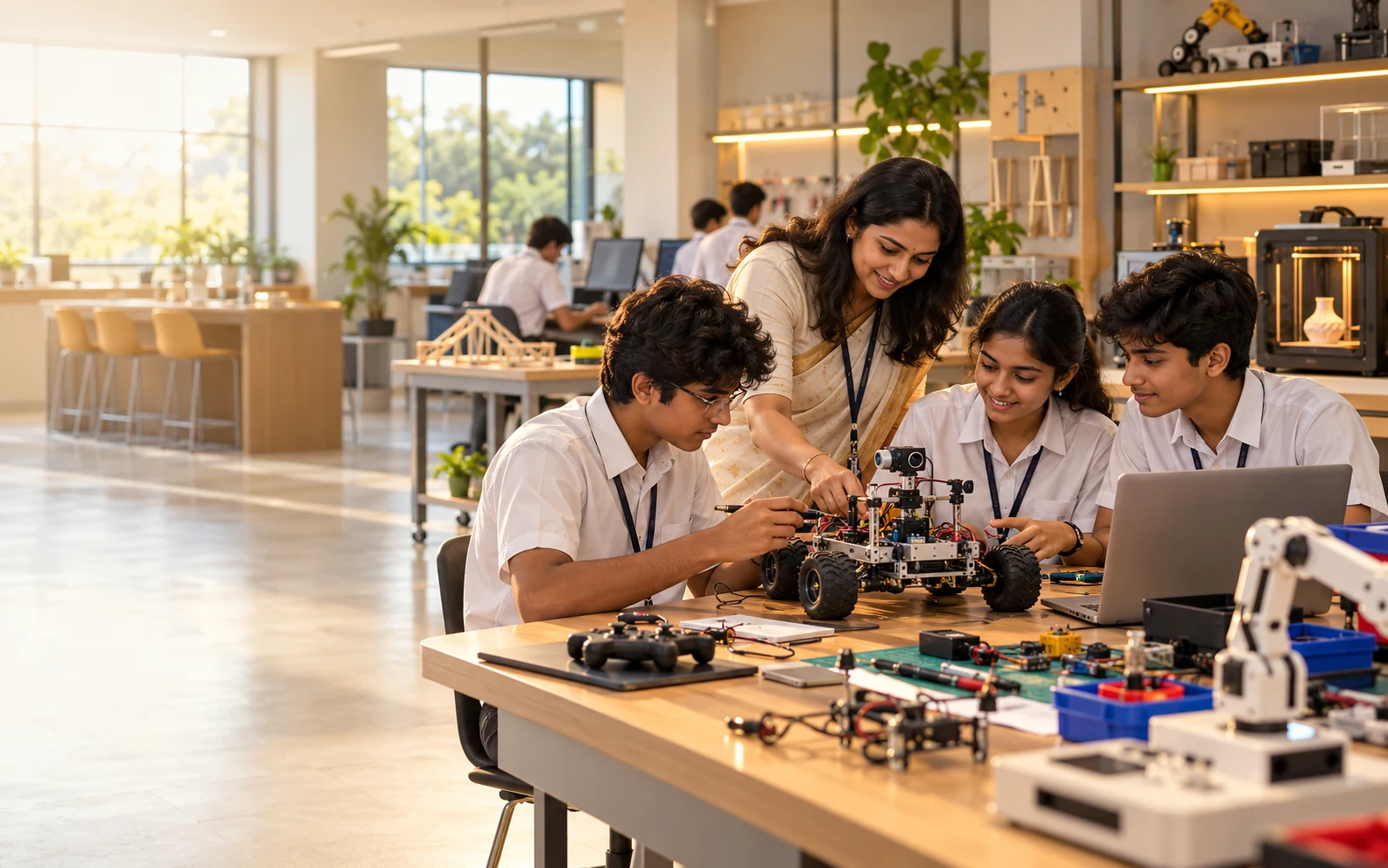
Organise by purpose
Create clear zones for investigation, measurement, making, testing and documentation so learners can follow an engineering cycle.
Budget beyond equipment
Room work, storage, consumables, curriculum, training and annual replenishment influence the real programme cost.
Connect projects to subjects
Science, mathematics, design and environmental themes give STEM challenges academic relevance and make timetable adoption easier.
This decision guide helps science, mathematics and technology departments compare scope without relying on a headline price or marketing promise. It separates essential delivery, optional upgrades, recurring needs and evidence so proposals for STEM lab setup can be compared on the same basis.
Before approval, write down the assumptions that could change the result: room readiness, active learner capacity, staff ownership, timetable, connectivity, consumables, maintenance and review cadence. For this solution, pay particular attention to tool control, ventilation, power planning, storage and teacher supervision. Any policy, compatibility, security or outcome claim should be checked against the current source and the provider's written scope.
Implementation steps
Issue one common requirement brief
Give every provider the same learner numbers, room facts, priority outcomes and support expectations for Quantum Matrix STEM & Robotics.
Separate scope and assumptions
Compare infrastructure, equipment, content, training, recurring items, exclusions and warranty or service terms line by line.
Validate the real workflow
Use a demonstration or sample activity to test investigation, engineering design, electronics, robotics and documented prototype testing with the people who will run it.
Agree the review point
Name the evidence owner and review design notebooks, measurement records, prototype tests and exhibitions before expanding the scope.
Questions to settle before the next decision
- What room size is required
- What equipment is needed for 20 to 40 students
- Can an existing science lab be converted
- Do teachers receive manuals and training
- How does Quantum Matrix STEM & Robotics work in a school
| Review area | Evidence to request | Warning sign |
|---|---|---|
| Learning or operating fit | investigation, engineering design, electronics, robotics and documented prototype testing | Equipment or features without a timetable workflow |
| Teacher and team readiness | Named owner, rehearsal and follow-up plan | One demonstration described as complete adoption |
| Evidence | design notebooks, measurement records, prototype tests and exhibitions | Outcome promises without a measurement method |
| Commercial scope | Itemised inclusions, exclusions and recurring needs | A headline price with unstated assumptions |
Planning references
Primary guidance and further reading
These references support the policy and implementation principles in this guide. Confirm product-specific features, compatibility and commercial scope in the current written proposal and demonstration.
Planning questions
Frequently asked questions
What determines STEM lab setup cost?
Capacity, equipment level, room condition, furniture, consumables, curriculum, training and support are the main factors.
Can a STEM lab support exhibitions?
Yes. Design journals, tested prototypes and presentations can build towards school exhibitions and innovation challenges.
What room size is required?
Room size depends on active batch capacity, storage and equipment. Measure usable floor area and circulation, then design safe investigation, making and testing zones before specifying a size.
What equipment is needed for 20 to 40 students?
For 20–40 learners, plan sufficient duplicate project kits, measurement tools, electronics, controllers, safety items, computing and storage so small groups can work rather than watch one demonstration.
Can an existing science lab be converted?
Yes, if a site audit confirms safe power, ventilation, storage, surfaces, circulation and separation of existing science equipment from making and robotics activities.
Do teachers receive manuals and training?
Teachers should receive lesson and safety manuals, equipment practice, project rehearsal, assessment examples and troubleshooting guidance, plus a defined route for follow-up support.
How does Quantum Matrix STEM & Robotics work in a school?
Students use zoned resources and a shared design cycle—frame, build, test, improve and explain—while teachers guide safety, curriculum links and evidence collection.
Related guides
Continue planning this solution

Quantum Matrix STEM and Robotics Learning Pathway
Connect investigation, engineering design and robotics projects across middle and secondary school.
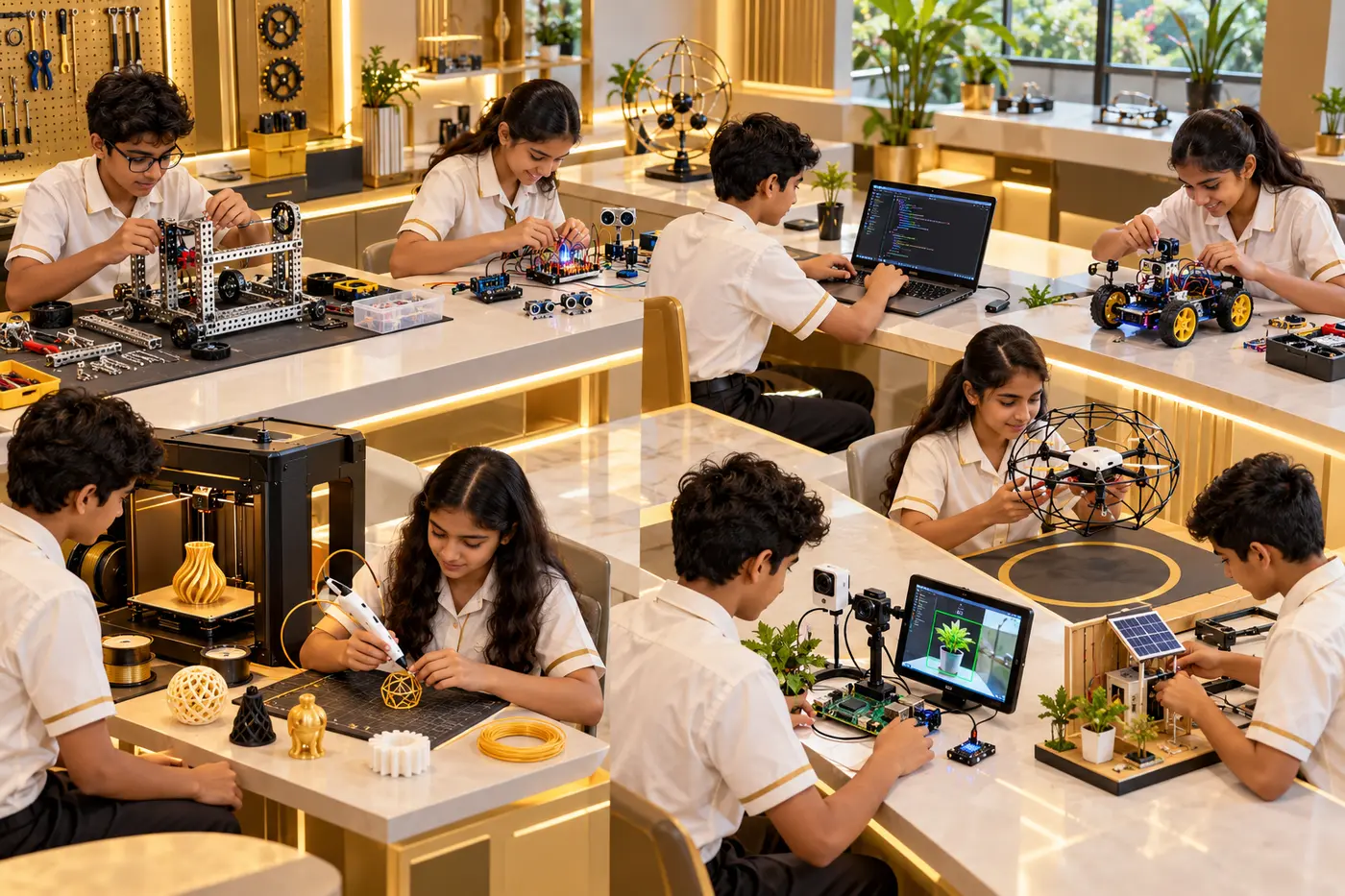
Choosing a STEM and Robotics Lab: Cost, Equipment and Support
A buying framework for schools comparing STEM lab providers, project depth and support after installation.